
Introduction
Yes, you can absolutely crate train an older dog. Despite the saying “old dog new tricks,” adult dogs of any age can learn to view a crate as a safe space with the right approach. In fact, many adult dogs develop reliable crate habits faster than puppies because they have longer attention spans, better bladder control, and a greater capacity to focus during each training session.
This guide covers everything you need to know about crate training an adult dog-from proven step-by-step methods and realistic timelines to common challenges and when professional support makes sense. It does not cover basic puppy crate training or house training fundamentals for young pups. Instead, it’s written specifically for owners working with dogs past puppyhood: whether you’ve adopted a new dog that has never seen a crate, you’re retraining a rescue with negative associations, or you have senior dogs that need a structured resting space.
The core answer is straightforward: older dogs can be successfully crate trained with patience, proper techniques, and consistent positive reinforcement. Crate training can take weeks or months for older dogs, but the results are well worth the investment. Most dogs begin showing comfort within two to four weeks of consistent short sessions, while dogs with prior trauma or anxiety may need four to eight weeks or longer.
Here’s what you’ll gain from this guide:
- Realistic timeline expectations based on your dog’s background and temperament
- A proven, step-by-step crate training process grounded in behavioral science
- Solutions for common challenges like resistance, whining, and anxiety
- A comparison of training methods to help you choose the right approach
- Professional insights from Off Leash K9 Training Richmond VA for complex cases
Understanding Crate Training for Adult Dogs
Crate training an adult dog requires a fundamentally different mindset than training a puppy. Adult dogs arrive with years of established habits, past experiences, and fully developed personalities that all shape how they respond to confinement. Understanding these differences is the first step toward building a successful training plan.
What Crate Training Means for Older Dogs
Successful crate training for an older dog means the dog voluntarily enters the crate, settles calmly inside, accepts the crate door being closed for moderate durations, and trusts that you’ll return. It goes beyond simple containment-it means your dog views the crate as a happy place and personal retreat, not a cage.
Dogs instinctively seek enclosed, den-like spaces for rest and security. This natural denning drive doesn’t disappear with age. When done correctly, crate training taps into that instinct, helping your dog feel safe rather than confined. The goal is to make the crate comfortable enough that your dog chooses to spend time there even with the door open. Never use the crate as a form of punishment; it should remain a safe space throughout the entire process.
Why Adult Dogs Need Different Approaches
Training an adult dog differs from working with a puppy in several important ways. Older dogs have established habits and may be anxious about crates, especially if they’ve never encountered one or had negative experiences in the past. A puppy approaches a crate with curiosity and minimal baggage, while an adult dog may approach with suspicion, fear, or indifference shaped by years of lived experience.
Older dogs may take longer to adjust to crate training compared to younger dogs. Their behavioral patterns are more deeply ingrained, and rewriting those patterns requires more patience and repetition. Dogs with past crate trauma need extra time to adjust. However, adult dogs also bring advantages: they typically have better impulse control, can hold their bladder longer, and respond well to structured routines. Senior dogs may also face physical considerations-joint pain or stiffness may affect a senior dog’s ability to get in and out of a crate, and cognitive dysfunction can cause anxiety in senior dogs when crated.
These physical and psychological factors mean that training an older dog requires meeting the dog at its own pace rather than following a rigid schedule designed for puppies.
Benefits and Applications of Crate Training Older Dogs
Understanding why crate training matters for adult dogs helps motivate consistent effort through what can sometimes be a slow process. The practical benefits extend far beyond simple containment.
Safety and Security Benefits
Crate training provides a safe space for dogs during emergencies, natural disasters, vet visits, and travel. A dog that’s comfortable in a crate can be transported safely without risk of injury or escape. During home renovations, parties, or other disruptions, a crate gives your dog a quiet retreat where it can feel safe. Crate training can provide comfort and protection for dogs in unfamiliar environments like hotels, boarding facilities, or a friend’s house.
Behavioral Management Applications
Crates can help stop destructive behavior in dogs by preventing unsupervised chewing, counter-surfing, or roaming through the house. For households with other pets, a crate offers a structured way to manage introductions and give each animal its own space. When paired with a broader behavior modification program, crate training supports separation anxiety management-though only when the crate has been introduced gradually, and the dog already views it as a safe place rather than a source of stress.
Health and Wellness Advantages
A crate provides a consistent quiet space for rest, which is especially valuable during illness recovery or post-surgical healing. It helps reduce environmental stress during storms, fireworks, or household chaos. For adult and senior dogs, establishing a predictable daily routine-exercise, feed, rest in crate, bathroom break-creates stability that supports both you and your pet. Building a predictable, positive routine helps acclimate senior dogs to crates and contributes to overall well-being.
With these benefits in mind, let’s walk through exactly how to implement crate training with your older dog.
Step-by-Step Crate Training Process for Older Dogs
The most effective approach to crate training combines two behavioral science principles: systematic desensitization (gradual exposure without triggering stress) and counterconditioning (building positive associations with the crate). Research shows that combining these methods with high-value rewards delivers more reliable outcomes and lower stress than approaches relying on force or punishment. Crate training requires patience and positive reinforcement at every stage.
Preparation and Setup Process
Before your first training session, proper setup dramatically improves your chances of success. Follow these steps in order:
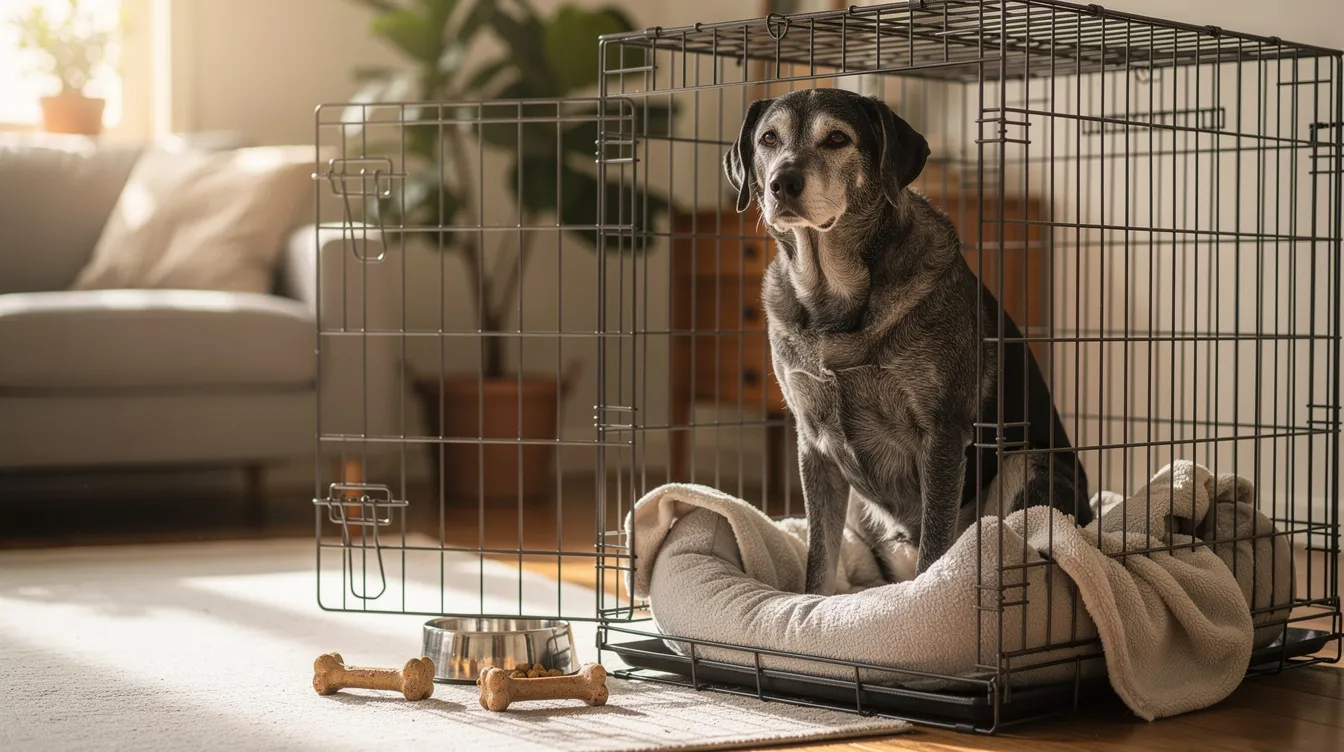
- Choose the right crate size and type. The crate should allow your dog to stand and turn around comfortably, but not be so large that there’s excess room to pace. A wire crate works well for most dogs because it provides ventilation and visibility; cover some sides with a blanket for a den-like effect. For senior dogs with mobility issues, consider crates with low thresholds or side-opening doors.
- Place the crate strategically. Introduce the crate by placing it in a lively area of the home-not a dark corner or isolated room. A low-traffic area near where the family spends time works best. Your dog should see the crate as part of daily life, not banishment.
- Make the crate comfortable. Add a soft bed or blanket, especially for dogs with joint issues. Consider the dog’s physical needs during crate training, such as arthritis. Place a familiar-scented item inside to help the dog feel safe.
- Begin a positive introduction with the crate door open. Over the next few days, toss a few treats just inside the opening-don’t push your dog inside. Leave the crate open and let your dog investigate at its own pace. Some dogs may refuse to enter the crate initially; this is normal. Gradually place treats further inside to encourage deeper entry.
- Feed meals inside the crate. Once your dog willingly enters, begin feeding regular meals inside with the door open. This builds powerful positive feelings about the space by pairing it with food-something every dog values.
- Gradually increase the time the crate door remains closed during training. Start by closing the crate door for a few seconds while your dog eats, then open it before any stress appears. Over sessions, extend this to 30 seconds, then a minute, then several minutes. Use a stuffed Kong or special treat to keep the dog inside engaged and calm. Signs of distress during training may indicate the need for a slower approach.
- Practice short absences. With the door closed and your dog calm, step out of the room for a few seconds. Return quietly-no fanfare. Gradually increase departure time to minutes, then longer. Avoid rewarding whining or barking by opening the crate; wait for quiet before returning.
- Establish a verbal cue. Add a consistent command like “crate,” “bed,” or “kennel up” linked with voluntary entry. Reward every successful response. Eventually, the cue alone will prompt your dog to enter willingly. This kind of clear communication aligns with how professionals at Off Leash K9 Training build reliable obedience.
Training Methods Comparison
Not every dog needs the same approach. Here’s how three common methods compare:
| Criterion | Standard Positive Reinforcement | Trauma/Anxiety Rehabilitation | Intensive Board & Train |
|---|---|---|---|
| Timeline | 2–4 weeks for basic comfort; up to 6 weeks for overnight/separation | 4–8 weeks minimum; sometimes several months | 1–3 weeks professional; ongoing home maintenance |
| Difficulty | Moderate; owner consistency is key | High; risk of setbacks without guidance | High cost; owner must maintain results |
| Best Suited For | Dogs with no prior trauma, mild resistance | Rescues, dogs with negative associations or confinement anxiety | Severe behavioral challenges; owners with limited time |
| Success Rate | High when treats are high value, and sessions are consistent | Depends heavily on dog’s history and owner patience | Very good for obedience; moderate for crate comfort alone |
For most dogs with no traumatic history, standard positive reinforcement works well. If your dog has deep-seated fears or you’re seeing destructive panic responses, professional help-whether through a veterinary behaviorist or an immersive board and train program-can accelerate progress while keeping your dog’s welfare front and center.
Use high-value treats to encourage your dog to enter the crate, and remember: you cannot shortcut trust. Regardless of which method you choose, the dog’s comfort level must guide every decision.
Common Challenges and Solutions
Even with the best preparation, challenges arise. Here are the most frequent issues and how to address them.
Resistance to Entering the Crate
Some dogs simply won’t go near a new crate at first. This usually stems from unfamiliarity or prior negative experience. The solution is patience and value: use extremely high-value food-real chicken, cheese, or liver-placed just inside the opening. Feed all meals near and then inside the crate. Never physically push or force the dog inside. Let the dog set the pace. Over several days, most dogs begin voluntarily entering. If your first dog was easy to crate train, remember that every dog is different. A dog walker or family member can help by casually tossing toys or treats near the crate throughout the day to normalize it.
Anxiety and Whining Behaviors
Separation anxiety can cause dogs to whine when crated, and it’s one of the most common reasons owners abandon crate training. The key distinction is between attention-seeking whining and genuine distress. Ignoring whining can help reduce attention-seeking behavior-opening the door when your dog vocalizes only teaches that noise works. However, if your dog shows true panic signs (drooling, self-injury, frantic pawing, elimination), you’ve moved too fast. Return to an earlier phase with shorter crate time and the door closed for only brief periods.
Gradually increase the time your dog spends in the crate rather than making dramatic jumps. Senior dogs may not be able to hold their bladders as long as younger dogs, so schedule bathroom breaks accordingly-adult dogs can stay in a crate for up to six hours during the day, but start with much shorter periods. Calming aids like pheromone sprays, background white noise, or a worn t-shirt with your scent can help. Burning off excess energy with exercise before crate time also makes a significant difference. For persistent anxiety issues, professional behavioral consultation is warranted.
Previous Negative Crate Experiences
Dogs that were crated as punishment or confined for long periods may have deep fear responses. Rehabilitation requires starting from scratch-sometimes literally with a different style of crate in a different location to avoid triggering old memories. Use systematic counterconditioning: pair every interaction with the new crate with something the dog loves. Keep the crate open at all times initially. Older dogs may take weeks or months to adjust in these cases, and research on confinement anxiety confirms that forcing progress only deepens resistance.
Consider using an exercise pen or dog-proofed room as an intermediate step before reintroducing a crate. Some dogs need to rebuild trust with confinement in general before a crate becomes viable. If progress stalls, working with a professional trainer who understands behavior modification can prevent months of frustration for both you and your dog.
Conclusion and Next Steps
You can train an older dog to love a crate. Whether your dog is a recently adopted adult, a senior needing a quiet retreat, or a long-time family pet that’s never been crated, success comes down to patience, consistency, and letting your dog move at its own pace. Crate training an older dog requires patience and a gentle approach, but the outcome-a fully crate-trained dog that views its crate as a safe place-is achievable for nearly every dog.
Here’s how to get started today:
- Assess your dog’s current state: note any anxiety triggers, physical limitations, or past crate experiences
- Choose an appropriate dog crate: proper crate size, comfortable bedding, and strategic placement in your home
- Begin the introduction phase: treats near the crate, meals inside, crate door open-no pressure
- Commit to daily short sessions: even five minutes of positive experience builds momentum
- Track progress and adjust: if your dog shows stress, slow down; if it shows comfort, gradually increase duration
For dogs that need broader obedience foundations alongside crate training, or when challenges feel beyond your expertise, don’t hesitate to seek professional guidance. Sometimes the difference between frustration and a breakthrough is having an experienced trainer assess what your dog actually needs.
Additional Resources
For complex crate training cases-dogs with severe separation anxiety, trauma histories, or behavioral challenges that extend beyond the crate-Off Leash K9 Training Richmond VA offers board and train programs that integrate crate comfort into structured daily routines with professional oversight. Their programs work with dogs of all ages and include owner education sessions to ensure you can maintain results at home.
Complementary training options like private obedience lessons or anxiety-specific behavior modification can address underlying issues that make crate training difficult. To learn more about finding the right dog trainer in Richmond or to schedule a consultation, visit the Off Leash K9 Training Richmond VA website.