
Key Takeaways
- Dog licking is natural, and often a sign of affection, but excessive licking of people can become disruptive or uncomfortable for everyone in the household.
- Learning how to stop a dog from licking people relies on calm redirection, boundaries, and simple obedience skills, not punishment.
- Dogs lick for many reasons, including attention seeking, anxiety, excitement, and habit, so identifying the “why” behind the behavior matters before correcting it.
- Consistency from every family member and guest is essential, or the dog will stay confused about when licking is allowed.
- Sudden or obsessive licking may require a vet check or professional training support, especially if it appears alongside other behavior changes.

Introduction
Most people find it charming the first time a pup licks their hand. But when that same dog is constantly licking every person who walks through the door, charm fades fast. Legs, ears, arms, faces: nothing is off limits for a dog that has learned licking works.
If you have been searching for how to stop a dog from licking people, this guide breaks the process into practical steps any family can follow. You will learn why dogs lick people in the first place, when licking crosses the line, and how to redirect the habit using calm, consistent dog training. Most dogs can learn better manners around people without harsh corrections or complicated tools.
Why Dogs Lick People Too Much
Dog licking is an instinctive behavior rooted in early life. Understanding the motive behind your dog’s licking is the first thing to address before changing the habit.
Affection and bonding. Dogs may lick to show affection and connect with their owners. Puppies experience licking from their mothers during grooming and care, and many dogs carry that behavior into adulthood. For some dogs, licking hands, arms, or faces becomes a familiar way to seek closeness, comfort, or social interaction.
Attention-seeking behavior. Dogs lick to get attention from their owners. If laughing, talking, or pushing away follows a lick, the dog learns that tongues on skin equal engagement. Even scolding counts as a reaction the dog finds rewarding.
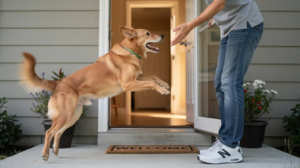
Excitement and greeting. When dogs lick people at the door, after work, or during play, it is often excitement-driven. These greeting licks come paired with jumping, wiggles, and sometimes a wild burst of energy that catches visitors off guard.
Anxiety or stress. Excessive licking can indicate anxiety or stress in dogs. Some dogs lick to self-soothe, and licking can help dogs feel calm during tension. If your dog is licking people, objects, or the air when the environment is otherwise quiet, anxiety may be at play.
Taste and exploration. Dogs may lick to explore their environment through taste. Sweaty skin can taste good to dogs, and residues from food, lotion, or smells on your skin invite investigation through their mouth.
Habit and unclear boundaries. If a dog has been allowed to lick for years with no guidance, the behavior becomes automatic. The dog might not understand there is another way to greet or connect with a person.
A dog’s licking behavior should be monitored for sudden changes that may indicate health issues. If your pup starts licking obsessively overnight, especially with restlessness, panting, or other symptoms, a vet visit is the right next step.
How to Stop a Dog From Licking People With Calm Redirection
The goal is not to punish dog licking. It is to teach the dog a calmer alternative behavior each time they move in to lick. Providing alternative activities can redirect licking behaviors effectively without creating stress.
What calm redirection looks like:
- Notice your dog is licking or moving in to lick.
- Quietly stand up or turn away. Break eye contact. Make no sound.
- After a brief pause, ask for a known command such as “sit.”
- When the dog sits, praise your dog for calm behavior and offer a small treat or calm pet.
- If the dog tries to lick again, repeat. No yelling, no big reactions, no pushing the dog’s face.
For attention-seeking licking, calmly withdrawing attention can teach the dog that licking does not continue the interaction. Turn away, pause briefly, then reward a calmer alternative such as sit, down, or place. If the licking seems sudden, obsessive, or connected to stress or discomfort, address the underlying cause instead of treating it as simple attention seeking.
Redirect licking by providing chew toys or puzzles. Keep an interactive puzzle or a durable chew toy nearby during high-lick times like evening TV or family gatherings. When the dog starts seeking contact, hand them the toy. This gives their mouth something acceptable to do.
Stopping excessive licking requires consistent training and redirection. Every lick attempt should be met with the same calm pattern. If you redirect three times but give in on the fourth, the dog learns that persistence pays off.
Be aware that some dogs may lick more at first when an old reward pattern changes. This does not mean the plan is failing, but it does mean the response must stay calm and consistent. Avoid yelling, pushing, or giving in after repeated licking, and reward the dog as soon as they choose a calmer behavior.
Training Skills That Help Reduce Licking
Clear obedience training gives your dog something specific to do instead of licking, especially around doors, couches, and children. Using incompatible commands can prevent dogs from licking because a dog holding a “down stay” cannot simultaneously jump up and lick a guest’s face.
Key commands to practice:
| Command | How It Helps |
| Sit / Down | Calm positions that replace jumping and licking during greetings or on the sofa |
| Place | A dog relaxes on a bed or mat while guests enter, which can help reduce unwanted greeting behaviors |
| Come / Recall | Call the dog away when licking starts, then reward for returning and settling |
| Watch Me / Look | Redirects the dog’s focus back to the handler and helps interrupt licking before it turns into a repeated habit |
Calm greetings. Rehearse short, structured sessions at the front door. The dog must sit or stay before being allowed to say hello. Block licking gently and reward calm sniffing or quiet contact instead.
Exercise your dog regularly to reduce boredom-related licking. For dogs that lick because of boredom, excitement, or excess energy, physical activity and mental stimulation can help reduce the urge to seek attention through licking. A walk before guests arrive, a quick training session, or a food-dispensing toy can take the edge off excitement.
Practice daily short sessions of 5 to 10 minutes combining obedience, calm behavior around people, and mild distractions. Build toward distraction-proof responses even when visitors laugh, talk loudly, or move quickly.
Mistakes That Can Make Dog Licking Worse
Many owners accidentally teach dogs to lick more because they do not realize which reactions function as rewards.
Laughing or talking. When a dog licks and the person starts laughing, talking, or squealing, the dog reads that as play and engagement. For a pet that thrives on social contact, this is exactly the response they wanted. The licking continues.
Pushing away or wrestling. Waving hands, gently shoving the dog’s mouth, or playful wrestling turns licking into a game. The dog gets physical contact, movement, and your attention all at once.
Yelling or harsh corrections. Scolding can create anxiety, which may increase the dog’s licking as a self-soothing response. It also damages trust and makes obedience commands less reliable.
Mixed rules. Be consistent with boundaries to avoid confusing your dog. If one person allows face licking but another corrects it, the dog has no clear way to understand what is expected. The same applies to allowing licking at home but stopping it in public, or letting the dog lick some guests but not others. Clear, consistent rules reduce confusion and make training easier for everyone in the household.
Punishing communication. Some dogs offer a gentle lick when they are uncomfortable with handling. Punishing that signal can shut down the dog’s way to communicate and contribute to more serious behavior problems.
When Excessive Dog Licking Needs Extra Help
Most dog licking can be shaped at home with patience and practice. But there are times when professional support or a vet visit is the safest option.
Signs that suggest a vet check:
- Sudden increases in licking people or objects
- Obsessive licking of the air, floors, or the dog’s paws
- Changes in appetite, weight, or sleep
- Licking that continues even in a calm, quiet room
Medical conditions like allergies, skin irritation, pain, gastrointestinal discomfort, or neurological issues can show up as unusual or constant licking. In some cases, repetitive licking may be connected to canine compulsive behavior that does not improve with standard redirection alone. If the licking is sudden, intense, or difficult to interrupt, a vet check is the right next step.
When professional training help is useful:
- The dog licks intensely during greetings, around children, or whenever the owner sits down
- Young dogs or high-energy breeds that have not responded to consistent home practice
- Situations where the dog’s licking is part of a larger pattern of anxious or reactive behavior
Look for qualified, humane trainers who can help build obedience, boundaries, and calm behavior in real-life situations. Structured training support can be especially helpful when licking happens around guests, children, distractions, or high-excitement greetings. Reviewing available training programs and pricing can also help owners choose the right next step for their dog.
Final Thoughts
Dogs lick people for many reasons, from affection and attention seeking to taste, excitement, anxiety, and habit. With calm redirection, clear boundaries, and consistent obedience training, many families can reduce excessive licking and enjoy calmer daily interactions.
The real answer to how to stop a dog from licking people is to teach what to do instead, rather than simply saying “no” over and over. Positive reinforcement of calm behavior builds habits that last. Watch for sudden changes or obsessive licking, and involve a vet when health concerns are possible.
If you feel stuck or overwhelmed, professional help with obedience, household boundaries, and calmer greeting behavior can make life with your dog feel more relaxed and predictable. You can contact a professional trainer for guidance if the licking habit is not improving with consistent practice at home.
FAQ
Below are common questions that cover practical concerns beyond what the main sections address.
Is it okay to let my dog lick my kids sometimes but not adults?
Inconsistent rules can confuse the dog and slow training. Choose one clear standard, such as “no licking faces” or “only brief licks on hands when invited,” and apply it the same way with every person. When children are involved, extra supervision matters. Dog saliva can carry bacteria, and kids have sensitive skin, so keep greetings short and wash hands after contact.
How long does it take to reduce a dog’s excessive licking habit?
Some families see improvement within a few weeks of consistent redirection, while deeply ingrained or anxiety-based licking can take longer to change. Track progress by noting when and where licking happens. Steady, calm practice creates better habits, while on-and-off training usually leads to slower results.
Can I use a taste deterrent on my skin to stop dog licking?
Taste deterrents should not be the first solution for licking people. Some owners may consider a dog-safe bitter spray on clothing, but this should only be used with caution and alongside active training. Avoid applying products to broken or irritated skin, and check with your vet before using anything your dog may lick directly. Calm redirection, boundaries, and rewarding alternative behaviors should remain the main plan.
What should I do if my dog only licks one specific person excessively?
That person should review how they interact with the dog. Extra talking, cuddling, or roughhousing may be rewarding the licking more than they realize. Have that person practice calm redirection, structured greetings, and consistent obedience so the relationship includes more guidance. If the dog seems anxious around that person, a trainer can help assess whether the licking is a stress response needing a different strategy.
Is it possible to stop dog licking completely, or should I just reduce it?
Licking is a natural behavior. The realistic goal is to limit when and how long dogs lick people, not to eliminate it forever. Decide on specific, realistic rules and focus training on those boundaries. By pairing boundaries with play, toys, treats, and structured obedience, you can enjoy your dog’s personality without constant licking taking over every kiss, greeting, and quiet moment on the couch.
