
Key Takeaways
- Puppy biting and play biting are completely normal during the biting stage, but you can teach bite inhibition and better manners with calm, consistent structure.
- Redirection to a chew toy, a brief time out when bites get hard, and basic puppy obedience are practical ways to improve your puppy’s biting fits.
- Yelling, rough play, or switching between laughing and scolding for the same behavior sends mixed signals and can make puppies bite more.
- Many puppies improve as they mature, finish teething, and receive consistent redirection, positive reinforcement, and daily training, but the exact timeline varies by dog.
- Starting puppy training early and seeking help before biting becomes a stronger habit saves time, frustration, and keeps everyone safer.

Introduction
If you have a new puppy at home, you already know the feeling of those needle-sharp puppy teeth clamping down on your fingers, sleeves, or shoelaces. Many puppies bite, nip, and mouth during the first few months, and most pet parents start searching for how to get a puppy to stop biting the moment skin gets broken for the first time.
The good news is that puppy mouthing is usually not aggression. Puppies naturally nip during the puppy stage as part of teething, curiosity, and social play. This dog training guide will walk you through clear, consistent steps to turn rough mouthing into softer play and polite puppy manners, without punishment and without losing your patience.
Why Puppy Biting Happens
Understanding why your puppy bites makes it much easier to respond calmly and choose the right strategy. Biting behavior in young puppies is almost always driven by a handful of predictable causes.
Teething and oral development. Puppies have about 28 deciduous teeth, which are later replaced by 42 permanent adult teeth as they mature. During the teething process, sore gums can make puppies want to chew on whatever they can reach, including hands, furniture, and shoes. Teething can increase biting and chewing, but how long puppy biting lasts also depends on structure, redirection, sleep, and consistent training.
Exploration and play. Puppies explore their environment primarily through mouthing. Playful mouthing with littermates is how puppies learn bite inhibition from their mother and littermates. When one puppy bites too hard, the other dog yelps and stops playing, teaching the biter to mouth gently next time. Puppy biting is a normal part of their developmental phase, not a sign of a bad dog.
Excitement and overstimulation. Fast-moving hands, children running, and loud play sessions can send a playful puppy into overdrive. When excitement spikes, nipping often increases too. Some puppies bite more when they are overtired, overstimulated, under-exercised, or due for a potty break. Many puppies need plenty of daily sleep, so missed naps can make evening biting feel more frantic.
Lack of structure. A new puppy home without predictable routines, rest periods, and clear rules tends to produce more nipping. Providing a structured routine helps puppies regulate their energy levels and reduces those wild moments when a puppy grabs everything in sight.
Stress or guarding. When biting comes with stiff body posture, growling, or guarding food and toys, it may signal aggressive or fearful behavior rather than normal mouthing. These situations benefit from professional support early.
How to Get a Puppy to Stop Biting Through Softer Play
The real answer to how to get a puppy to stop biting is not to shut down all mouthing overnight. Instead, you shape play so the puppy learns what is safe to bite and how softly to use its mouth. Think of it as teaching the same lesson that littermates teach each other, just with human guidance.
Redirect immediately. When your puppy’s mouth moves toward skin or clothing, calmly swap in a tug toy, rubber chew, or puppy safe chews and praise the puppy for biting the toy instead. Redirect biting to appropriate chew toys immediately, every time. Positive reinforcement encourages puppies to choose toys over biting, and consistency is what makes it stick. Keep appropriate chews within arm’s reach in every room so you are never caught without one.
Teach puppy bite inhibition. Bite inhibition training helps puppies learn to control bite force. If a bite lands too hard, you can calmly mark it with a short “ouch,” then pause play for 30 to 60 seconds. For some puppies, a high-pitched sound may work, while others become more excited, so keep your response calm and consistent. After the brief time out, resume play gently. Teaching bite inhibition is important because a puppy that learns to use a softer mouth is safer around children, guests, and other dogs.
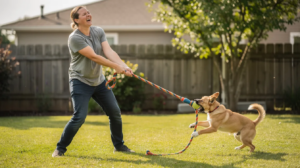
Structured games that teach softer play. Play tug safely by setting clear rules: use a start cue, a stop cue, and practice “drop it” so the puppy learns to release on command. If the puppy’s mouth touches skin, the game stops. Let the puppy win sometimes to build confidence. Brief fetch sessions also channel energy away from hands. Use positive reinforcement to reward good behavior during every game.
Keep sessions short. For many puppies, 5 to 10 minutes of active play is enough before overstimulation kicks in. After a play burst, offer a rest period, a potty break, or a quiet chew. Puppies need physical exercise to reduce biting behavior, but too much chaotic activity has the opposite effect. Exercise helps reduce excessive biting behavior in puppies when balanced with adequate rest.
Bitter spray as a supplement. Bitter spray on furniture edges or clothing can protect items, but it should always be paired with clear redirection to appropriate chews. Deterrents alone do not teach your puppy what to do instead.
Sample evening routine. After dinner, take your puppy for a short, calm walk. Follow it with a few minutes of gentle obedience practice like sit and leave it. Then offer a structured tug session with clear rules. If the puppy continues to nip, redirect to a chew toy or pause the interaction briefly. End the evening with a frozen puppy-safe chew in a quiet space before bed. This combination of mental stimulation, light exercise, and rest can help reduce the tired, overstimulated biting that often spikes at night.
Training Skills That Build Better Puppy Manners
Basic puppy obedience and daily structure are powerful tools for reducing puppy nipping and building overall good behavior. A puppy that has learned impulse control through simple cues is far less likely to lunge and bite during greetings or play.
Foundation cues that support safer mouth manners:
| Cue | How It Helps |
| Sit | Replaces jumping and nipping during greetings |
| Down | Encourages calm settling instead of frantic energy |
| Leave it | Teaches the puppy not to bite or grab forbidden items |
| Drop it | Helps when a puppy grabs clothing, shoes, or hands |
| Stay | Builds patience and self-regulation |
Ask for a “sit” before petting, before going outside, and before greeting visitors. This teaches your puppy that calm behavior earns rewards, not biting.
Gentle handling practice. Teach your puppy that hands are for petting, not chewing. Pair gentle touches on paws, ears, and muzzle with treats and calm praise. Mark and reinforce good behavior when the puppy keeps its mouth off skin. Over time, a puppy learns that a relaxed body and closed mouth earn more attention than nipping.
Short, frequent sessions. Keep training to 2 to 5 minutes several times per day. Short bursts prevent fatigue and frustration, which are common triggers for a puppy temper tantrum. Start in low-distraction areas, then gradually add distractions as your puppy’s manners improve.
Puppy classes can help support better manners by giving puppies structured practice around distractions and other puppies. Socialization classes can teach puppies how to interact more appropriately while giving owners professional guidance on timing, redirection, and reinforcement. Choose a well-managed class that uses positive, age-appropriate training methods.
Mistakes That Can Make Puppy Biting Worse
Well-meaning dog owners can accidentally encourage puppy biting through inconsistent or confusing responses. Recognizing these mistakes is the first step toward fixing them.
- Roughhousing with hands. Wrestling, chasing feet, or letting a puppy grab sleeves as a game teaches that moving hands and clothing equal fun. These habits are difficult to undo once a puppy’s jaw grows stronger. Rough play is one of the fastest ways to reinforce biting.
- Harsh corrections. Yelling, smacking the nose, or scruffing can create fearful behavior, more anxiety, and sometimes more biting instead of learned bite inhibition. Punishment undermines trust and rarely teaches what you actually want the puppy to do.
- Inconsistent reactions. Laughing at nipping one moment and scolding the next teaches mixed messages. Every person in the household needs to follow the same rules, or the puppy’s behavior will not improve.
- Over-tiring the puppy. Skipping naps, running long chaotic play sessions, or providing too little mental stimulation often leads to more frantic biting in the evening. If biting spikes at the end of the day, the puppy likely needs more rest, not more activity.
Replace these patterns with calm redirection, predictable rules, and consistent rewards for quiet, polite choices. When adult dogs carry biting habits from the puppy stage, the root cause is almost always inconsistency during these early months.
When Puppy Biting May Need Professional Help
While most play biting improves with patient, consistent training, some biting patterns are a sign that expert support is important. Not every puppy follows the standard timeline, and some situations call for a customized approach.
Red flags to watch for:
- Deep puncture wounds or serious bruising, not just normal mouthing
- Stiff body language, hard staring, or growling that does not stop when the puppy backs away or is given space
- Biting when guarding food bowls, bones, or a favorite toy
- Biting that persists despite weeks of consistent redirection and structure
If your puppy shows concerning biting, guarding, fearful behavior, or aggressive behavior, talk with a veterinarian first to rule out pain or other medical issues. From there, reviewing available training programs and pricing can help you choose the right level of support for your puppy’s behavior.
Early intervention during the first 6 to 9 months can prevent stronger habits from forming. It also makes future off-leash reliability and public manners far easier to achieve.
Final Thoughts
Puppy biting is a normal phase. It is completely normal for puppies to nip, mouth, and test boundaries as they grow. But normal does not mean it should go unguided. With bite inhibition training, softer play, clear house rules, and appropriate chews, many puppies bite less intensely as they mature and learn better manners.
If you have been wondering how to get a puppy to stop biting, the answer comes down to patience, structure, and repetition rather than quick fixes or punishment. Redirect every bite. Reinforce good behavior. Keep sessions short. And make sure your puppy gets enough rest, exercise, and mental stimulation every single day.
If biting persists despite your best efforts, or if you feel stuck and unsure whether your puppy’s behavior is normal, reach out for professional help with puppy obedience and early manners. Getting support during the puppy stage is one of the smartest investments you can make for a calmer, more confident dog and a much happier household.
FAQ
How long does the puppy biting stage usually last?
Many puppies bite the most between 8 and 20 weeks, with teething often peaking around 3 to 5 months. Puppy biting typically lasts between three and six months as a phase, and puppies usually stop biting between eight and ten months old as adult teeth finish coming in. Consistent redirection, positive reinforcement, and daily training typically shorten this stage. Without clear structure, normal mouthing and nipping can drag on longer.
Is it okay to let my puppy chew on my hands if it does not hurt?
It is best to stop puppy biting on skin entirely, even when it feels gentle. As your puppy grows, what starts as playful mouthing can become painful. Allowing hand biting creates confusion about what is acceptable. Always offer a chew toy, rope toy, or rubber toy instead so the puppy learns a simple, consistent rule: hands are for petting, toys are for biting. This also builds good bite inhibition for interactions with children and guests.
What should I do if my puppy bites my children during play?
Supervise all interactions between young children and puppies. Keep play sessions short and focus on calm activities like simple fetch rather than chasing and wrestling. When biting starts, an adult should step in calmly, pause play, and redirect the puppy to a tug toy or chew. Teach children to move slowly, keep hands low, and avoid waving fingers near the puppy’s face. Consistent supervision during the puppy stage protects both the child and the puppy from forming bad habits.
Can crate time or playpens help with puppy biting?
Yes. A brief break in a crate or playpen can help an overtired or overstimulated puppy reset when the space has been introduced positively. Use a quiet area with soft bedding and puppy-safe chews so the puppy sees it as rest, not punishment. Return to gentle interaction once the puppy has settled and shows a relaxed body. This approach can be especially helpful when evening biting is driven by tiredness or overstimulation.
How many chew toys should my puppy have to reduce biting?
Provide a small variety of safe chew toys and textures, such as rubber toys, soft chews, frozen items for sore gums, and rope toys. Rotate them every few days to keep interest high. Place at least one toy within reach in every room where the puppy spends time so you can quickly redirect any unwanted puppy nipping to an appropriate chew. A dog trainer may also suggest puzzle toys for added mental stimulation, which helps reduce overall biting by keeping the puppy engaged.
