
Key Takeaways
- Dog humping behavior is driven by excitement, stress, habit, or attention seeking, not just sexual motives. Both male dogs and female dogs mount people, other dogs, and objects.
- Yelling, laughing, or pushing the dog away can accidentally reward unwanted humping and make it worse over time.
- Teaching obedience skills like sit, down, recall, place command, and calm greetings gives dogs clear alternatives to mounting behavior.
- Consistent training and clear boundaries from every person in the household are essential for lasting change.
- Sudden, excessive, or compulsive behavior warrants a vet check and may benefit from professional training support.
Introduction
Dog humping behavior is one of the most common concerns owners talk about, and it is also one of the most misunderstood. Whether your dog mounts a guest’s leg, humps other dogs at the park, or targets a favorite toy, the behavior tends to catch people off guard and often leads to embarrassment. Most people assume that dog mounting is always sexual or a sign of dominance, but the reality is more layered than that.
Dog humping is a normal canine behavior driven by various factors, and it does not automatically reflect social status or reproductive intent. With calm structure, redirection, and clear boundaries, most unwanted humping can be reduced or redirected to better choices.
This dog training article covers why dogs hump, when it becomes a problem, how to redirect it, and what training skills help create calmer behavior in daily life.
Why Dog Humping Behavior Happens
Both male and female dogs hump, whether intact or fixed, young or old. Dogs hump people, other dogs, and objects for many reasons, and understanding the cause behind your dog’s behavior is the first step toward guiding better choices.
Dog humping is not always sexual behavior or about dominance. More often, it reflects a dog’s arousal level, a learned habit, or a way of coping with stress. Here are the most common triggers:
Excitement and Overstimulation
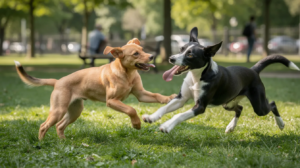
- Dogs may hump due to excitement during play, especially during high-energy greetings, zoomie episodes, or chaotic environments like parks and parties.
- Humping can occur due to excitement or overarousal during playtime, particularly when play lacks structure or breaks.
- Puppies may also mount during play before they are sexually mature, which supports that many forms of mounting are not purely sexual in nature.
Attention Seeking
- Humping can be a way for dogs to seek attention. If mounting reliably gets a reaction from owners, even a negative one like yelling or pushing, the dog learns that humping works to get noticed.
- A dog seeking attention through humping may target a specific person because that person gives the biggest response.
Stress, Anxiety, and Displacement
- Some dogs hump as a response to anxiety or stress. Humping can occur as a displacement behavior when dogs feel conflicted or overwhelmed, similar to how humans fidget in stressful situations.
- Dogs may hump when they are anxious, and for some animals, humping can become a self-soothing behavior. Some dogs use mounting to cope with stress, excitement, or uncertainty in new situations or around unfamiliar visitors.
- For example, a female mixed breed who only mounts her dog bed when guests arrive may not be showing sexual behavior. In that situation, the behavior may be connected to anxiety, excitement, or stress rather than hormones.
Social Status
- Mounting behavior can sometimes be connected to social interactions between dogs, particularly in multi-dog households. However, owners should not assume every mount is about dominance or rank. Look at the full context, including body language, tension, guarding, play style, and whether the other dog is uncomfortable.
Hormones
- Hormonal influences can contribute to humping in intact dogs, and a female dog in heat may also mount other pets. Spaying or neutering may reduce hormone-driven mounting for some dogs, but the behavior does not always disappear because humping can also become a learned habit tied to excitement, stress, attention, or routine.
- Intact males and females left unaltered also carry the risk of unwanted puppies if mounting leads to actual mating, which is another reason many owners consider neutering or spaying.
Medical Causes
Sudden increases in humping frequency, especially combined with licking, chewing, or visible discomfort, should prompt a conversation with your veterinarian to rule out medical causes. Medical issues such as urinary tract infections or skin allergies can lead to increased humping behaviors.
How to Redirect Humping Calmly
The most effective way to reduce humping is calm, consistent redirection rather than yelling or punishment. The goal is to interrupt the behavior immediately and guide the dog toward a better choice.
Step-by-Step Redirection
- Spot the early signs. Watch for pre-mounting cues: an excited, tense body, lunging toward a person or dog, or hyper-focused staring. Identify triggers to better manage your dog’s humping behavior.
- Use a neutral marker. Say a calm “uh-uh” or “off” without raising your voice. Redirect your dog to alternate behaviors using a known command like sit, down, or place.
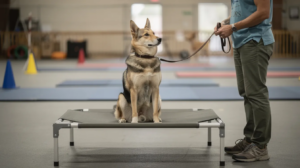
- Guide to a mat or bed. Direct the dog onto a dog bed, mat, or place cot and reward calm behavior there. Use positive reinforcement so settling becomes more rewarding than humping.
- Redirect humping behavior by engaging your dog in a different activity. Offer a puzzle feeder, a short training session, or a brief calm play session.
Managing Excitement and Overstimulation
- Keep playtime calm to help reduce overstimulation and humping. Use shorter play sessions with planned breaks.
- During dog-dog play, watch for escalation. If your dog starts fixating on other playmates, step in before the mounting begins.
- Structure greetings on a leash so the dog cannot rush at guests. This helps reduce the chance that dogs reach the level of excitement where they hump.
- Use consistent boundaries to discourage unwanted humping. Calm playtime can help reduce humping due to excitement.
Anticipate and Preempt
Encourage both you and your family to anticipate triggers. If guests are arriving, kids are running, or high-energy play is ramping up, give the dog a place command before humping starts. Preemptive structure is more effective than reactive correction.
Consistency from all family members is crucial. If one person redirects calmly while another laughs it off, the dog receives mixed signals, and progress stalls. With consistent training, many dogs improve over time, but the timeline depends on the dog’s age, triggers, routine, stress level, and how long the habit has been practiced.
Training Skills That Help Build Better Choices
Clear obedience skills give dogs structure and help them make better choices than humping when they are excited or stressed. Think of these skills as the toolkit that replaces unwanted humping with calm, rewarded alternatives.
Sit and Down
These are foundation skills for impulse control. A dog that can sit or lie down around distractions is far less likely to jump, lunge, or hump people and other dogs. Practice these in low-distraction settings first, then gradually increase the challenge.
Place Command
Teaching your dog to go to a designated mat or bed and stay there calmly during meals, guest visits, or children’s play can be a helpful tool for reducing unwanted humping. The place command gives the dog a clear job and a rewarded position, which can help interrupt mounting before it becomes the dog’s default response.
Recall
A reliable recall, or coming when called, is helpful for interrupting dog mounting at dog parks, daycare, or in the yard. When you can call your dog away from a situation and redirect your dog’s attention to another activity, you reduce rehearsal of the mounting habit.
Calm Greetings
Train routines where dogs practice sitting for petting, holding eye contact, and receiving quiet praise instead of jumping and humping when a person walks in. Many dogs improve with repetition when calm behavior is consistently rewarded.
Additional Tools
- Teach your dog the “leave it” command for impulse control. This works well when a dog begins to fixate on a target.
- Use positive reinforcement to reward appropriate behaviors at every opportunity.
- Regular, structured walks and basic obedience practice serve as outlets for energy, which can lower the dog’s need to cope with arousal through humping.
- Practicing these skills around increasing distractions helps dogs stay in control even in stimulating environments where dogs hump more often.
Mistakes That Can Make Humping Worse
Well-intended reactions can accidentally reward unwanted humping or increase stress, making the behavior more frequent rather than less.
- Yelling or physical correction. Scolding or physically pushing the dog away can scare the dog, raising anxiety and arousal, or be interpreted as rough play. Punishing a dog for humping can increase anxiety and worsen the behavior. Either way, it makes things worse, not better.
- Laughing or making a scene. Talking about it loudly or reacting with a big laugh gives the dog exactly what it wants: attention, eye contact, and engagement. This reinforces the behavior. If your dog has stopped humping and then starts again after guests react dramatically, the pattern is likely attention-driven.
- Inconsistent rules. Allowing a dog to mount at home on a favorite pillow but reacting strongly when the dog mounts a guest confuses the dog about what is allowed. Dogs need clear boundaries that apply in every context.
- Physical restraint without teaching alternatives. Holding the collar, using a crate, or putting the dog on a leash stops the moment but does not teach the dog what to do instead. Restraint alone does not reduce stress or build skills.
- Misattributing everything to dominance. Assuming all dog mounts are about dominance can lead owners to respond with confrontation rather than focusing on training and management. Many mounting behaviors are more closely related to excitement, stress, attention-seeking, play, habit, or hormones than rank.
- Harsh corrections for puppies. Avoid punishing pup humping with heavy-handed methods. Instead, calmly redirect puppies to a toy, rest, or a short training session. This helps reduce the chance of the habit becoming stronger without creating anxiety or aggression.
When Humping Becomes a Problem
Occasional humping during play or excitement can be normal behavior for many dogs. But some patterns become disruptive, embarrassing, or unsafe.
Problematic Scenarios
- Dogs that hump guests’ legs, children, or other dogs who are clearly uncomfortable or reactive.
- A dog may become frantic if stopped, ignore redirection entirely, or fixate on one specific person, dog, or object. In some cases, anxiety or stress can contribute to repetitive mounting that is difficult to interrupt and may need professional support.
- Physical risks can include irritation from repeated mounting or injury from conflicts with other dogs who react poorly to being mounted. If mounting becomes intense, repetitive, or difficult to interrupt, it should be addressed before it creates a safety issue.
When to Seek Help
- Frequent humping may indicate the need for a veterinary checkup to rule out medical concerns. If humping suddenly increases, appears painful, or occurs alongside licking, chewing, or urinary changes, it could point to a medical problem requiring medical attention.
- If unwanted humping persists despite consistent training and management, professional behavior or obedience training can help develop a structured plan. Reviewing available training programs and pricing can also help owners choose the right level of support for their dog.
Final Thoughts
Dog humping behavior is common, and it is usually driven by excitement, overstimulation, stress, or attention-seeking rather than purely sexual motives. Understanding the cause behind the behavior helps owners respond with clarity instead of frustration.
Calm redirection, clear boundaries, and practicing obedience skills like sit, down, recall, and place command help dogs choose calmer behaviors instead of humping. Focus on what you want the dog to do, not just on stopping what you do not want to see.
Stay patient and consistent. Dogs do not change overnight, but many dogs make progress when their owners commit to a structured approach. When mounting behavior is sudden, severe, or resistant to change, veterinary input and professional training support can help identify the cause and create a safer plan.
If unwanted humping is affecting life at home or in public, experienced help with obedience, structure, and behavior modification can set both you and your dog on the right path.
FAQ
Is it ever okay to let my dog hump toys or pillows?
Occasional humping of a toy or pillow can be harmless, especially if it is brief, not obsessive, and does not carry over to guests or children. However, if the behavior becomes frequent, intense, or hard to interrupt, it is better to calmly redirect the dog to another activity or a place command. Remove specific objects if your dog fixates on them and cannot relax, and talk to a vet or trainer if the pattern continues.
Why does my dog only hump one specific person or dog?
Dogs may hump a particular person or dog due to unique associations like excitement, past play history, or mixed feelings such as stress and curiosity. Certain body language, scent, or behavior from that individual can trigger mounting behavior more than others. Management steps include supervising interactions, using a leash and place commands around that person, and rewarding calm, neutral behavior instead. If your dog tends to initiate play through mounting with certain other playmates, structured introductions help redirect that energy.
Can more exercise stop my dog from humping?
Appropriate physical and mental exercise can help reduce stress and overall arousal, which may lower dog humping frequency for some dogs. However, exercise alone does not teach replacement behaviors. Pairing exercise with obedience practice, consistent boundaries, and structured rest is more effective than relying on activity alone.
Is dog humping a sign of a bad temperament or future aggression?
Most dog humping is not a predictor of aggression and often reflects excitement, habit, or poor impulse control. Concern is higher when humping comes with growling, guarding, or other pushy behaviors that ignore social signals from people or other dogs. Early training for impulse control is a strong sign of responsible ownership, and if there are additional warning signs, a professional evaluation can help ensure safe, respectful behavior around all animals and people.
At what age should I start addressing puppy humping?
Address puppy humping as soon as it appears, using gentle redirection rather than punishment. Early guidance can help keep the habit from becoming stronger and teaches puppies to settle, play appropriately, and respond to simple commands. Proper socialization, rest, and simple obedience practice can help reduce inappropriate humping in puppies. Build daily routines with short training sessions, rest periods, and appropriate chewing alternatives to support calm, balanced development.
