
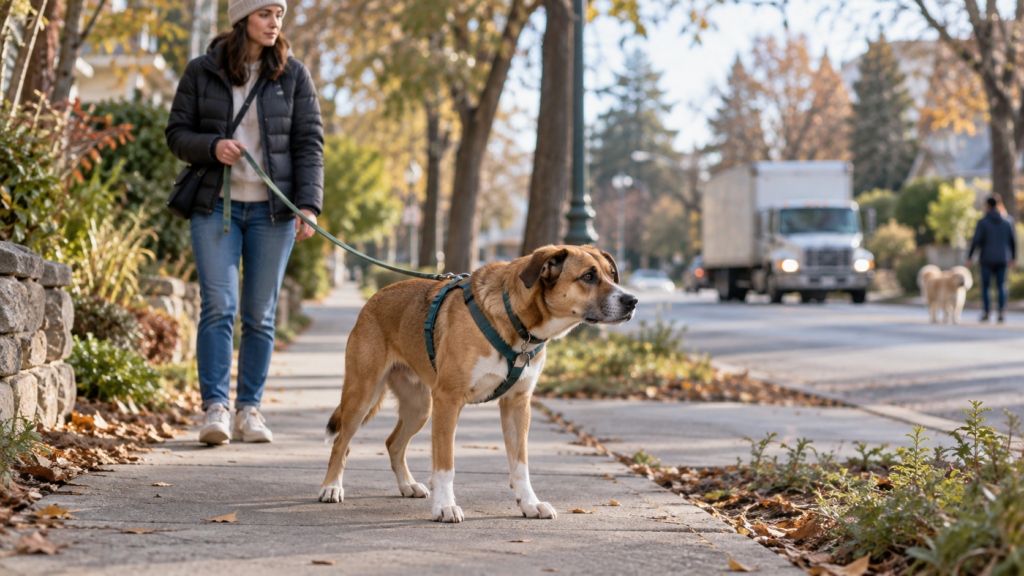
You’re a few steps into a walk, and your dog stops. He may plant his paws, lower his body, or simply refuse to move. If your dog freezes on walks, it can be confusing and a little stressful, especially when you aren’t sure what set it off.
A freeze is information. Your dog is telling you something about how he feels, and once you understand why he stopped, you can help him move forward calmly.
Common Reasons a Dog Stops Walking
Fear
A dog scared on walks may freeze when he sees or hears something unsettling, like a loud truck, a barking dog, or an unfamiliar object. Stopping is often his way of assessing the risk.
Overstimulation
Busy streets, strong smells, and constant movement can overload some dogs. When there’s too much to process, a dog may shut down and stop.
Unfamiliar Environments
New routes, surfaces, or neighborhoods can make a dog hesitate. Puppies and newly adopted dogs often need time to feel comfortable outdoors.
Uncertainty and Lack of Confidence
Dogs with limited outdoor experience may not know how to handle new situations. Without confidence, even routine walks can feel like a lot.
Possible Physical Discomfort
Sore joints, paw problems, or other physical issues can make walking unpleasant. A dog who refuses to walk may be avoiding discomfort, not being stubborn.
When to Call Your Veterinarian
Check with your vet if:
- Your dog suddenly stops on walks, and the change is new
- The freezing is persistent or getting worse
- You notice limping, stiffness, or favoring a leg
- Your dog seems to be in pain or shows other physical symptoms
A vet can rule out medical causes. If your dog gets a clean bill of health, behavior and training become the next focus.
What to Do When Your Dog Freezes Outside
Stay Calm and Pause
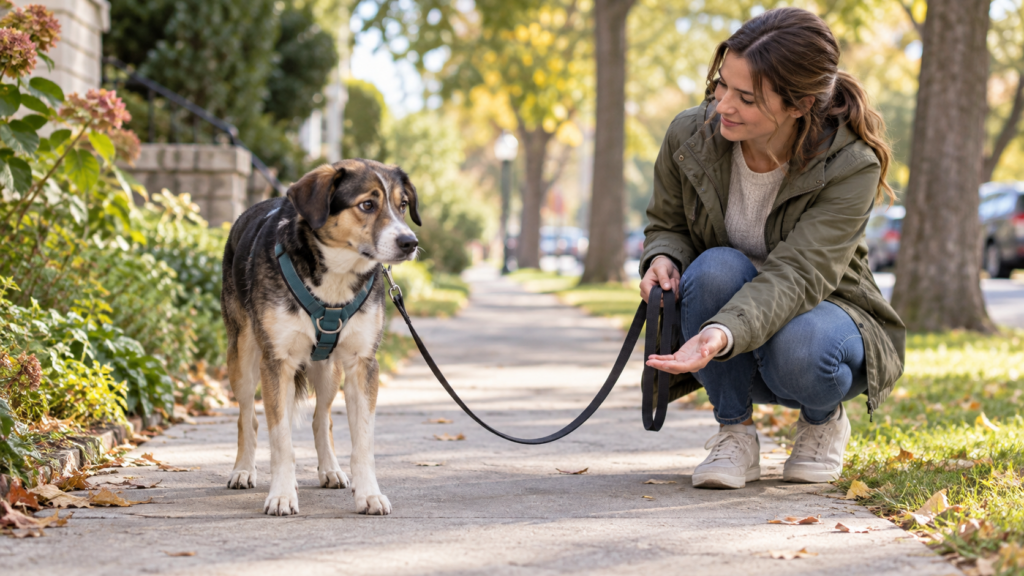
Avoid pulling or dragging. Give your dog a moment to take in what’s around him. Your calm presence helps him feel safer.
Create Distance From the Trigger
If you can see what’s bothering him, move away until he relaxes. Turning around or crossing the street is not a failure. It keeps the walk positive and prevents him from feeling trapped.
Use Calm Encouragement
Speak in a relaxed, upbeat tone. Step slightly ahead and invite him to follow rather than tugging the leash.
Reinforce Forward Movement
Reward steps in the right direction with praise or a treat. Reward movement, not the freeze itself, so freezing doesn’t become a way to get food.
Build Confidence Gradually
Start with short walks in quiet places, then slowly add new sights, sounds, and distance. Let your dog set a comfortable pace and increase the challenge only when he’s relaxed.
Don’t Force It
Pushing a frightened dog past his limit can increase fear and damage trust. Progress usually comes from small, repeated successes.
Track Patterns in Your Dog’s Walking Behavior
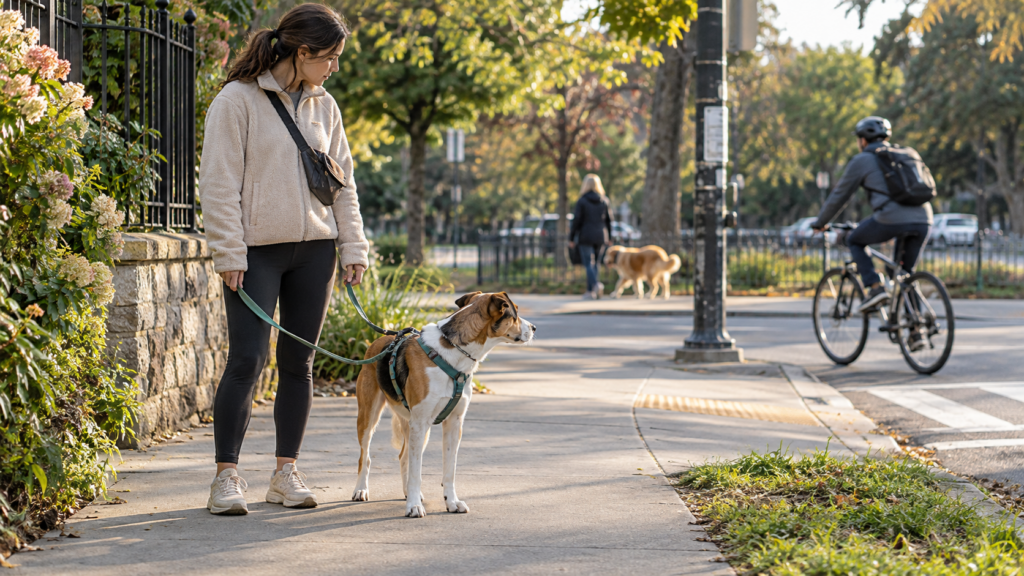
Notice when and where the freezing happens. Does it occur near certain houses, at a specific time of day, or after a particular sound? A simple log can reveal triggers and help you plan walks around them.
Common Mistakes to Avoid
- Dragging or pulling your dog forward
- Rushing exposure to scary situations
- Treating the freeze itself
- Ignoring pain or limping
- Skipping practice in easy settings
- Expecting steady progress every day
When Training Support Can Help
If freezing keeps happening, seems fear-based, or you can’t tell what’s behind it, a qualified trainer can help. A trainer can observe your dog, build a plan around his triggers, and coach you through leash handling and confidence-building. Obedience training, including practice around distractions, can also give your dog useful skills for walks.
Frequently Asked Questions
Why does my dog suddenly stop on walks?
A sudden stop can come from fear, a startling sound, overstimulation, or physical discomfort. If it’s new, repeated, or comes with limping or other symptoms, have your veterinarian take a look. If there’s no medical cause, look at recent changes in routine or environment.
Should I pull my dog to keep walking?
It’s best to avoid pulling or dragging, since it can increase fear and stress. Pause, create distance from anything upsetting, and invite your dog to follow. Reward movement once he’s relaxed enough to go.
Is my dog scared or just stubborn?
Look at body language. A scared dog may look tense, tuck his tail, or try to retreat, while a dog who is sniffing or delaying usually looks relaxed. If you’re unsure, a trainer can help you read the signs.
Can a dog that refuses to walk learn to enjoy walks again?
Many dogs improve with patience, gradual exposure, and consistent practice. Progress depends on the dog and the cause. A trainer can help you set realistic goals.
How do I know if the freezing is medical?
Warning signs include sudden onset, limping, stiffness, reluctance to move that doesn’t ease, or other physical symptoms. Only a veterinarian can say for sure. When in doubt, get him checked first.
