
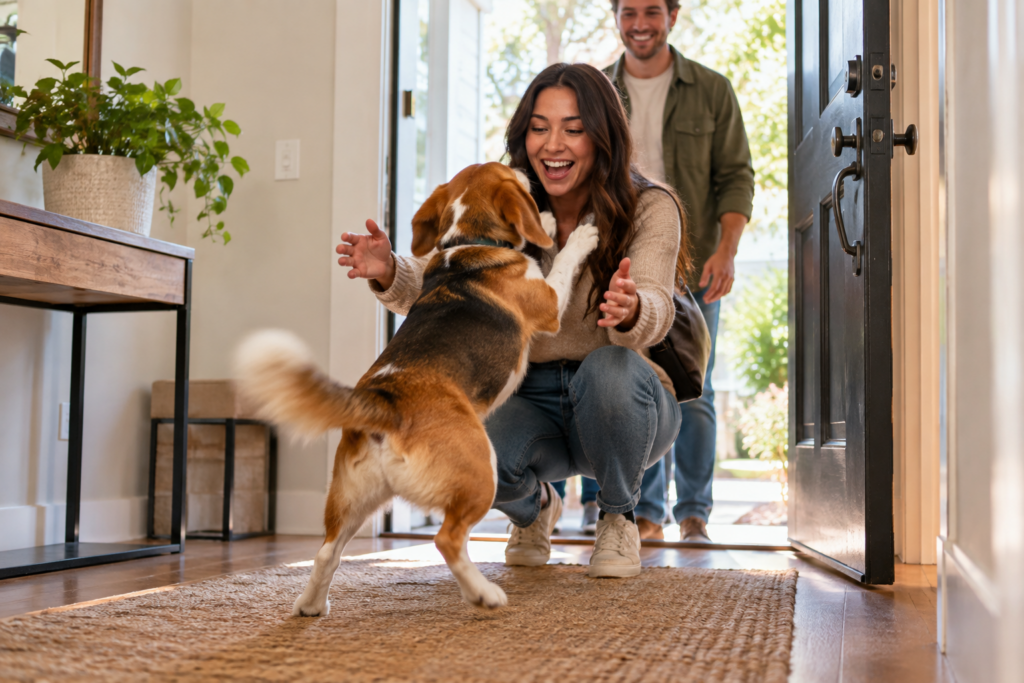
The doorbell rings, and your calm, well-behaved dog turns into a bouncing, barking whirlwind. If your dog is overexcited when guests arrive, it can make visits stressful for everyone, including your dog.
The good news is that greeting behavior is a skill. With structure, practice, and consistency, many dogs learn to handle visitors more calmly. Here’s why it happens and what you can do.
Why Your Dog Is Overexcited When Guests Arrive
Most dogs aren’t being rude. They are reacting to a big moment they haven’t learned to handle yet.
Anticipation
Guests are exciting. Doorbells, voices, and footsteps predict attention, so your dog starts building excitement before anyone walks in.
Lack of Impulse Control
Dogs who haven’t practiced waiting or pausing tend to act on instinct. Jumping or rushing the door becomes the default.
Inconsistent Boundaries
If jumping is sometimes allowed, such as when a guest says “I don’t mind,” your dog learns that it can work. Mixed signals make it hard to understand what’s expected.
Difficulty Settling Around Distractions
A dog who relaxes at home may struggle when new people, noise, and movement show up. Skills that work in a quiet room can fall apart at the door.
Signs of Overexcited Greeting Behavior
- Jumping on guests
- Barking, spinning, or whining
- Rushing the door
- Mouthing or grabbing clothes
- Difficulty settling after visitors come in
How to Build Calmer Greetings
Manage the Environment
Set your dog up for success before guests arrive.
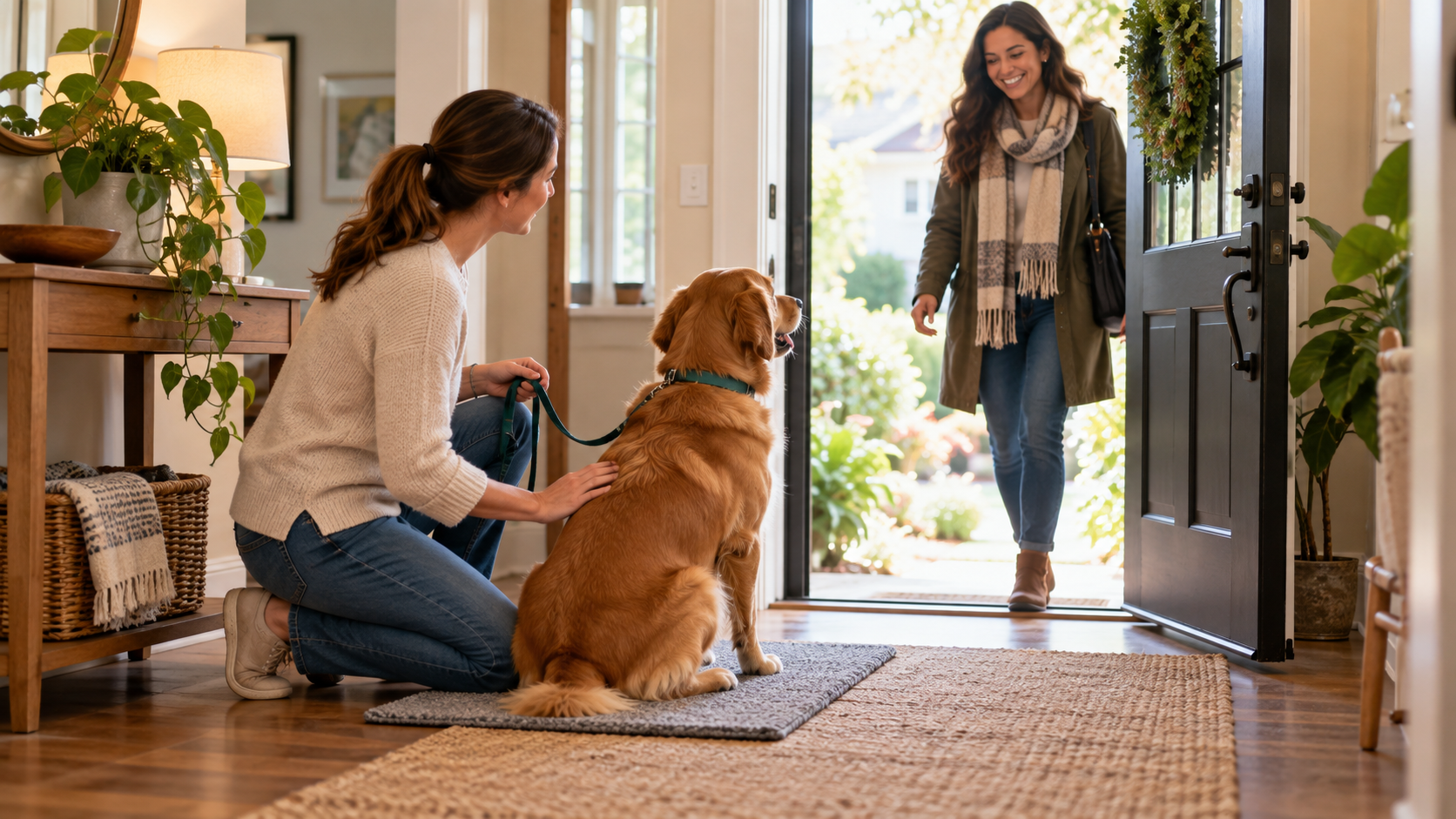
- Keep your dog on a leash or behind a baby gate at the door
- Ask guests to text or knock instead of ringing the bell
- Give your dog a walk or training session beforehand
- Offer a chew or food toy once he’s settled
Management stops your dog from rehearsing jumping while you teach something better.
Teach Sit or Place
Pick one calm behavior and practice it often.
- Sit: Ask for a sit at the door and reward it. Release your dog to greet only when he is calm.
- Place: Teach your dog to go to a mat or bed and stay there while guests come in. Add distance and distractions gradually.
Place can be especially helpful for dogs who struggle to keep a sit when excited.
Build Impulse Control
Short, simple exercises add up:
- Wait at doors until released
- Sit-stay with small steps back and forth
- “Leave it” with a treat on the floor
- Hold a Place while someone walks by
If your dog is too excited to respond, move farther from the trigger and try again.
Reward Calm Behavior
Catch the behavior you want. Reward four paws on the floor, a calm sit, or quiet moments before the doorbell rings. Calm attention from guests can be a reward too, once your dog is settled.
Practice Before Guests Arrive
Real visits are too hard for early training.
- Start with a family member as a helper
- Practice the doorbell or knock
- Add the door opening, then someone stepping inside
- Gradually use friends who know the plan
Keep sessions short and stop on a good note.
Coach Your Guests
Share a simple rule before they come in:
- Ignore the dog until he’s calm
- Skip excited greetings and high-pitched voices
- Give attention only when four paws are on the floor
One guest who rewards jumping can undo a lot of progress.
Common Mistakes to Avoid
- Letting some people allow jumping
- Skipping management when guests arrive
- Repeating commands over and over
- Punishing or yelling at the dog
- Expecting calm without practice
- Using large or very bouncy dogs to “test” real visitors too soon
When Professional Evaluation Makes Sense
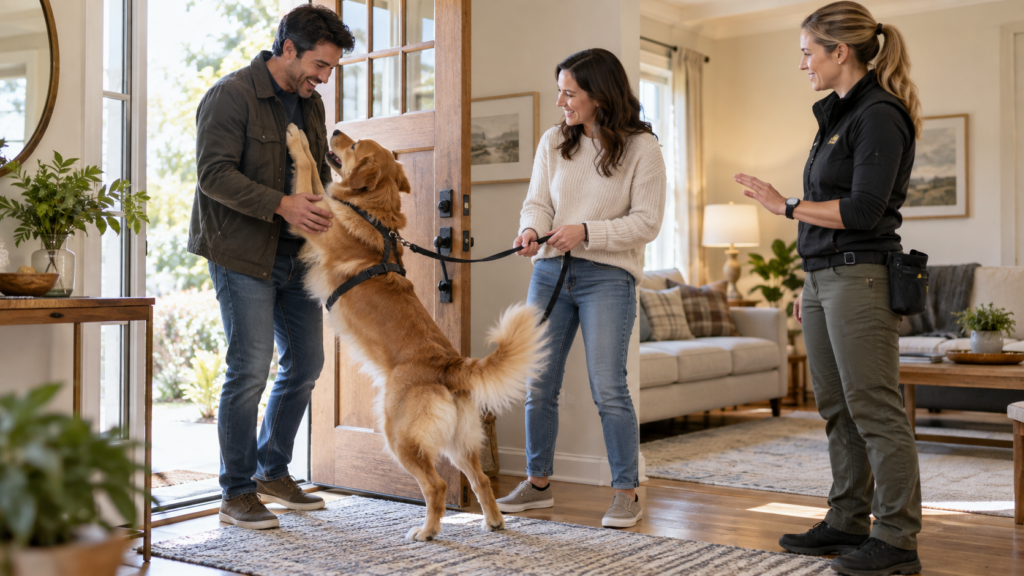
Overexcitement is common, but not every dog’s behavior is just excitement. If your dog shows fear, growling, snapping, stiff posture, or intense reactivity around visitors, get a professional evaluation rather than trying to work through it alone. A qualified trainer can assess your dog’s body language, identify what’s driving the behavior, and build a plan that keeps everyone safe.
Frequently Asked Questions
Why does my dog get so excited when guests come over?
Guests predict attention and activity, so your dog builds excitement before anyone walks in. Dogs with limited impulse control or inconsistent greeting rules often struggle most. Practice and clear expectations can help.
How do I stop my dog from jumping on guests?
Reward calm behavior, such as sitting or keeping four paws on the floor, and prevent jumping with a leash or gate. Ask guests to ignore the dog until he’s calm. Consistency from everyone matters.
Should I put my dog away when guests arrive?
It can help in the early stages of training, especially if your dog is very excited. The goal is to gradually teach calm behavior with visitors present. Using Place or a gate while you practice is a good middle step.
Does exercise help before guests arrive?
A walk or training session can lower your dog’s baseline excitement, making it easier to settle. It works best alongside training, not as a replacement for it.
When is it more than excitement?
If your dog shows fear, growling, snapping, or severe reactivity around guests, get a professional evaluation. These behaviors need a different approach than ordinary excitement.
Final Thoughts
When a dog is overexcited when guests arrive, the fix is rarely quick or one-size-fits-all. Manage the setup, teach a calm greeting, build impulse control, and practice before the next visit. If progress stalls or you’re unsure what’s behind the behavior, consider working with a professional dog trainer who can guide you through practical, real-life steps.
