
Introduction
Dogs get the zoomies because they need to release pent-up energy, process excitement, relieve stress, or simply express pure joy. These sudden bursts of frenetic running-where your dog starts running at full speed in circles, tucking its butt and making crazy eights across the yard or living room-are one of the most entertaining and sometimes baffling behaviors dog owners witness. The good news: zoomies are completely normal and, in most cases, a sign of a happy dog.
This article covers what dog zoomies actually are from a scientific standpoint, the specific triggers that cause them, how to keep your pup safe during episodes, and when zooming dogs might need professional attention. Whether you’re a first-time puppy owner watching your furry friend tear through the house at midnight or an experienced handler with a high-energy breed that erupts into chaos after every bath, this guide will help you understand and manage the behavior with confidence.
Here’s what you’ll take away:
- The science behind why dogs get the zoomies, including the formal term and what’s happening physiologically
- The most common triggers, from post-bath zoomies to evening energy peaks
- How to create a safe space and manage episodes without making them worse
- When zoomies signal a deeper issue that warrants professional help
- Training strategies that build impulse control and reduce problematic outbursts
Understanding Dog Zoomies
Zoomies, formally known as frenetic random activity periods (FRAPs), are brief, intense episodes where a dog explodes into high-speed movement. Zoomies are also known as frenetic random activity periods (FRAPs), a term behavioral scientists use to describe the “random” onset, “frenetic” intensity, and short duration of these energy releases. Zoomies are normal bursts of energy in dogs-not a malfunction, not defiance, and certainly not a bad thing. Most dogs experience them throughout their lives, especially puppies and young dogs still developing their capacity for self-regulation.
What Zoomies Look Like
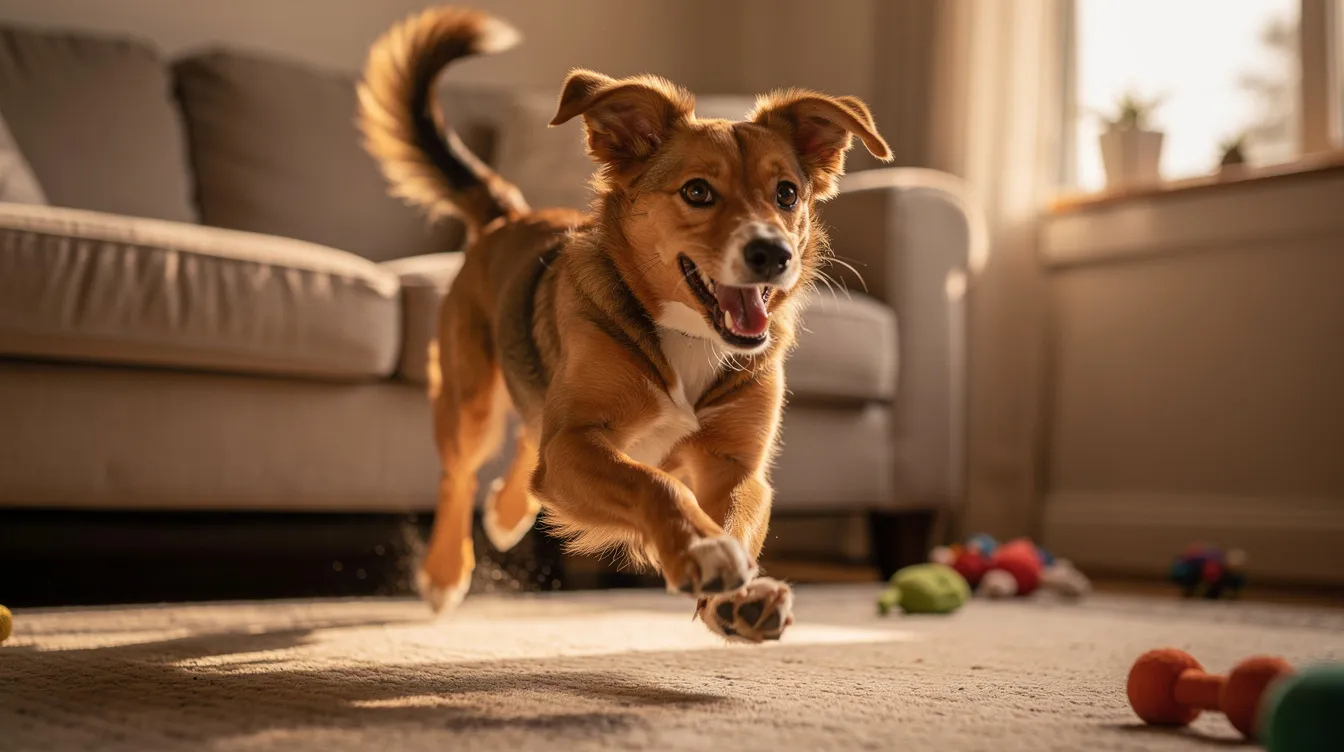
When a dog gets the zoomies, the behavior is unmistakable. Your dog starts running at full speed-often in tight circles or figure-eight patterns (sometimes called crazy eights)-with a distinctive tucked rear end and lowered body. You’ll frequently see play bows, sharp pivots, spinning, leaping, and sometimes excited vocalizations. The tail is usually loose and wagging, ears are relaxed or perked forward, and the overall dog’s posture radiates excitement rather than fear.
Zoomies typically last only a few minutes-rarely more than five to ten-before the dog collapses into panting, satisfied rest. Zoomies typically last only a few moments in many cases, though intensity varies. Puppies may have shorter but more frequent bursts, while adult dogs and older dogs tend to have less frequent but sometimes more forceful episodes. High-energy breeds like border collies, huskies, and shepherds often produce the most dramatic displays, covering more ground at higher speeds.
The key distinction to watch for is body language. A happy dog zooming will have a loose, wiggly body. If your dog’s posture shows a tucked tail, pinned-back ears, wide eyes, or tight lips during these bursts, the behavior may stem from stress or fear rather than joy-an important difference we’ll explore later.
The Science Behind Zoomies
Physiologically, FRAPs function as a rapid energy discharge mechanism. Dogs build up physical and neural arousal through rest, confinement, emotional excitement, or environmental constraint. When that buildup reaches a threshold, the body releases it through explosive movement. Neurologically, this engages the same fight-or-flight circuitry that governs adrenaline surges and dopamine release-the dog’s system essentially flushes excess energy and arousal chemicals through intense physical activity.
Behavioral ethologists have studied this pattern across species, noting that arousal regulation behaviors like FRAPs help animals avoid channeling excess energy into destructive or anxious behavior. In simpler terms, zoomies serve as a natural pressure valve. Research on canine activity patterns using accelerometers has shown that dogs living in structured human households tend to have more pronounced high-activity bursts followed by longer rest periods than free-roaming dogs-suggesting that the rhythm of domestic life itself contributes to the build-up and release cycle that produces zoomies.
Understanding this mechanism is essential because it reveals that zoomies aren’t random misbehavior-they’re your dog’s biology working as designed. With that foundation, let’s examine the specific situations that trigger these episodes.
Common Triggers and Causes
The triggers behind frenetic random activity periods fall into several overlapping categories. Recognizing your dog’s specific triggers is the first step toward managing the behavior effectively.
Energy Release and Exercise Needs
The single most consistent trigger for zoomies is pent-up energy. Dogs confined indoors, kept in a crate for extended periods, or given only low-intensity walks without opportunities to run freely will accumulate excess energy that demands an outlet. Lack of exercise can lead to increased zoomies in dogs-it’s a straightforward equation of energy in versus energy out.
Age plays a significant role. Puppies are more prone to zoomies due to high energy levels, rapidly developing bodies, and limited self-regulation. Puppy zoomies are a daily occurrence in most households with young dogs, especially puppies under a year old. On the opposite end, many older dogs experience fewer FRAPs as their energy levels naturally decline, though a senior dog that’s been inactive all day can still surprise you with a spirited burst.
Breed matters enormously. Working breeds, herding dogs, and sporting breeds carry more energy and stronger drive than lower-energy companions. These dogs often need significantly more exercise and mental stimulation to prevent their zoomies from becoming a management problem-60 to 90 minutes of quality physical activity daily is a common recommendation for high-drive breeds.
Emotional and Environmental Triggers
Excitement is a powerful zoomie catalyst. Many dogs erupt into FRAPs when their owner returns home, when they see the leash come out for a walk, or when play begins. Zoomies can be triggered by excitement, like seeing a leash-the anticipation alone floods the dog’s system with arousal that has to go somewhere.
Stress relief drives another major category. Post-bath zoomies are nearly universal: the combination of physical restraint during bathing, the unfamiliar sensation of water, and the sudden freedom afterward creates a perfect storm for a FRAP. Zoomies often occur after stressful events like vet visits, after periods of separation, or following any situation where the dog was forced to suppress its natural impulse to move.
Dogs may get zoomies during their “witching hour” between 5-8 p.m.-a well-known phenomenon among dog owners where evening energy peaks coincide with family routines, feeding times, and shifts in household activity. Dogs may experience zoomies during certain times of day, like evening or after long periods of rest, which is why midnight madness episodes catch so many owners off guard, especially with puppies that napped through the afternoon.
Specific Situational Causes
Post-bathroom relief is a surprisingly common trigger. After defecation, dogs frequently launch into a brief zoomie-possibly from physical relief, a posture shift, or simply feeling happy that discomfort has passed. Weather changes, doors opening to the yard, and exposure to novel outdoor stimuli like wind or wildlife also catalyze bursts.
Social triggers deserve special mention. Watching another dog zoom at the dog park can be contagious-many dogs will join in spontaneously. Family gatherings, children playing, or the arrival of guests create the kind of heightened household energy that sets off chain-reaction FRAPs, particularly in young dogs.
Key trigger categories to remember: physical energy surplus, emotional excitement, stress relief, time-of-day patterns, environmental changes, and social contagion. Understanding which category your dog’s zoomies fall into will guide your management strategy.
Managing and Redirecting Zoomies
Now that you understand what drives the behavior, here’s how to handle it safely and, when needed, reduce its frequency through structured approaches.
Immediate Safety Management
Providing a safe environment is important when dogs experience zoomies to prevent accidents. When your dog launches into a FRAP inside the house, your priority is making sure the space is dog-safe:
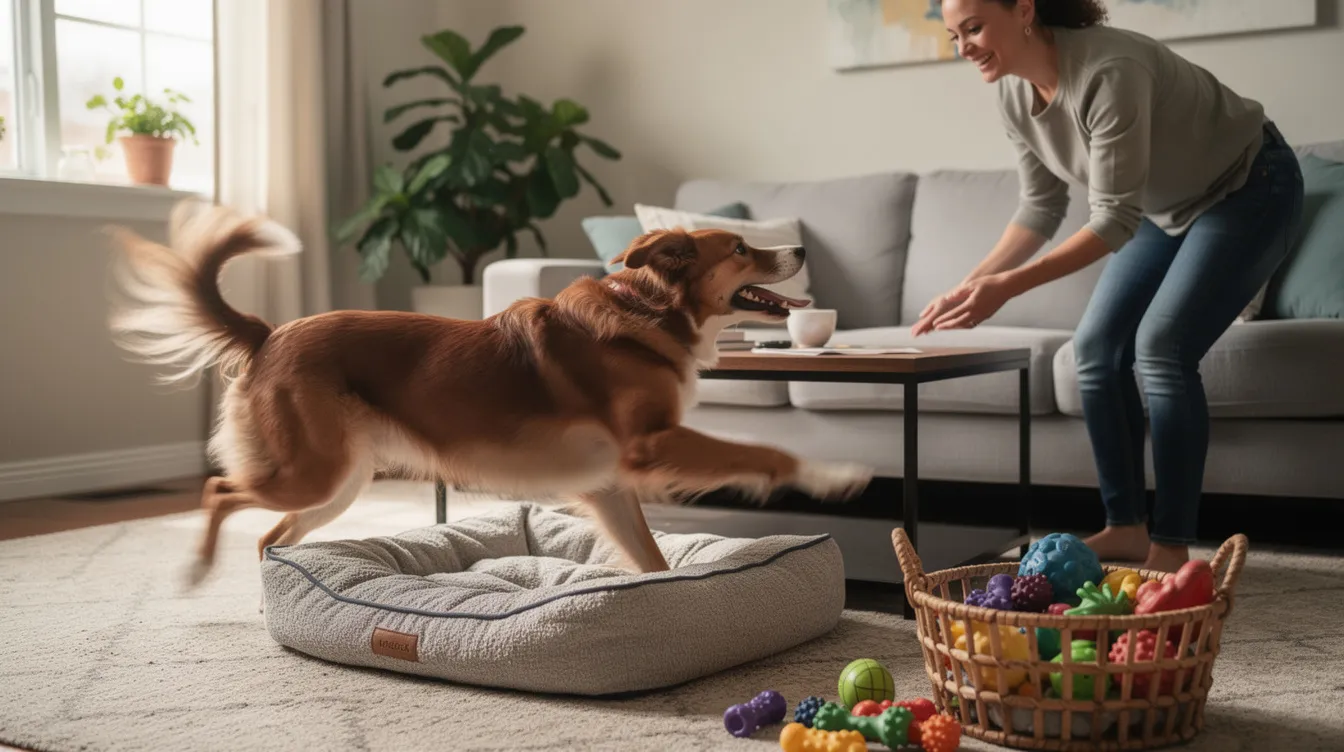
- Clear the area of fragile items, loose rugs on hardwood floors, and anything your dog could crash into. Create a safe space free of hazards for zoomies-move furniture with sharp corners and secure breakable objects.
- Block dangerous zones like staircases, open doors to traffic, and rooms with glass or heavy objects. Make sure your pup has enough space to run without injury.
- Do not chase your dog during zoomies to avoid accidents. Chasing escalates arousal dramatically and can lead to collisions, falls, or a game of keep-away that reinforces the behavior. Instead, stand still or sit down.
- Let it run its course. In most cases, the episode will end naturally within minutes. Redirect zoomies with treats or toys if necessary-tossing a treat to the ground or presenting a favorite toy can help transition your dog out of the episode calmly.
- Move outdoors when possible. If your yard is fenced, open the door and let your dog zoom where there’s enough space and fewer hazards.
For cats and other pets in the household, be aware that zooming dogs can inadvertently injure smaller animals. Separate pets during known zoomie windows if this is a concern.
Prevention Through Training and Exercise
The most effective long-term approach to managing zoomies combines physical exercise, mental exercise, and structured training. Here’s how different approaches compare:
| Approach | Daily Exercise | Mental Stimulation | Training Focus |
|---|---|---|---|
| Basic Management | 30–60 min walks and play | Puzzle toys, treat dispensers | Basic obedience cues |
| Professional Training | Structured exercise matched to breed | Advanced games, scent work, mental exercise | Impulse control, off-leash reliability |
| Board & Train Programs | Intensive daily activity with professionals | Comprehensive enrichment protocols | Complete behavior modification, arousal regulation |
Ensure your dog gets enough exercise to reduce zoomies-this is the single most impactful change most owners can make. For many dogs, simply adding more exercise and a second daily walk eliminates the most disruptive episodes. For high-energy breeds, structured training sessions that combine physical activity with impulse control work produce the best results.
Mental stimulation is equally important. A tired brain calms a dog as effectively as tired muscles. Puzzle feeders, scent work, obedience games, and interactive play all help drain excess energy before it reaches the zoomie threshold. Puppy training programs that introduce these concepts early help young dogs develop better arousal regulation from the start.
Common Challenges and Solutions
While zoomies are fun to watch in most situations, certain scenarios create real problems for owners.
Inappropriate Timing and Location
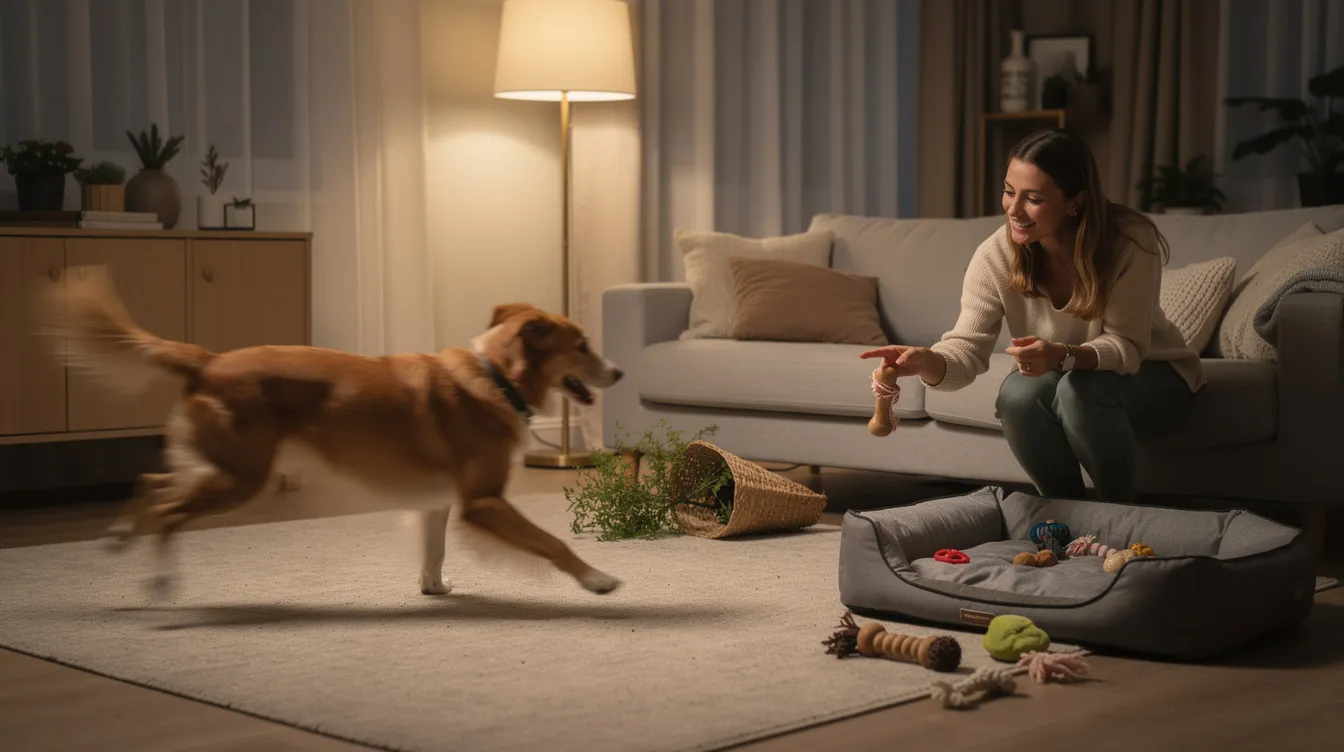
When your dog gets the zoomies in the house during dinner, at 11 p.m. during midnight madness, or in a crowded public space, it stops being fun quickly. The solution is twofold: establish a consistent daily routine that includes adequate exercise and enrichment at predictable times, and train a reliable “settle” or “place” cue. Dogs that learn impulse control through structured training sessions can transition from high excitement to calm behavior on cue-a skill that transforms daily life. Resources like impulse control training programs demonstrate how dramatically this can change a dog’s behavior.
Safety Concerns with Large or Strong Dogs
A 90-pound dog running at full speed through the house isn’t just chaotic-it’s dangerous for children, elderly family members, furniture, and the dog itself. For large or strong breeds, investing in off-leash training is essential. A dog with reliable recall can be redirected mid-zoomie, and a dog that understands boundaries can be guided to appropriate spaces. Establishing a designated play area in your yard and teaching your dog to use it gives you a management tool that works every time.
Excessive Frequency Indicating Underlying Issues
Zoomies can indicate a happy and healthy dog, but excessive frequency tells a different story. If your dog is zooming multiple times daily, if the behavior coincides with signs of stress (tucked tail, wide eyes, destructive behavior afterward), or if episodes seem to cause pain or limping, something deeper may be at play. Veterinary guidance should be sought if zoomies become frequent and problematic-underlying anxiety, chronic under-stimulation, or physical pain from conditions like arthritis can all manifest as intensified FRAPs.
A professional behavior evaluation can distinguish between a dog that simply needs more exercise and one that requires comprehensive behavior modification. Dogs displaying reactive or anxious behavior alongside frequent zoomies benefit from expert assessment to address root causes rather than just symptoms.
Conclusion and Next Steps
Dog zoomies are a natural, healthy expression of energy and emotion that most dogs display throughout their lives. They aren’t a sign of disobedience or a bad thing-they’re your dog’s built-in system for regulating arousal and maintaining happiness. Puppies are more prone to getting zoomies than older dogs, high-energy breeds need more outlets, and every dog benefits from owners who understand the behavior rather than fight it.
Your immediate action steps:
- Evaluate whether your dog is getting enough exercise and mental stimulation for its breed and age
- Identify your dog’s primary zoomie triggers and time-of-day patterns
- Create a safe space in your home and yard where zoomies can happen without risk
- Learn to read your dog’s posture to distinguish joyful zoomies from stress-driven episodes
- If zoomies are frequent, intense, or causing safety concerns, consult a professional trainer for a personalized plan
For owners interested in building stronger impulse control, off-leash reliability, or addressing behavior challenges that go beyond simple zoomie management, professional training programs can accelerate progress dramatically. Related topics worth exploring include structured socialization for puppies, recall training for off-leash reliability, and enrichment strategies for high-energy breeds-all of which directly reduce problematic zoomie episodes while building a stronger bond between you and your dog.
