
Introduction
Understanding resource guarding in dogs is the first step toward addressing the behavior safely and effectively, especially when a dog begins showing signs around food, toys, chews, or other valued items. It is a natural canine behavior that can serve an adaptive function, but when it escalates, it becomes one of the most misunderstood and potentially dangerous behavioral issues pet parents face. Understanding what causes resource guarding is the first step toward addressing it safely and effectively.
This article covers the biological, environmental, and learned influences behind resource guarding behaviors. It’s written for dog owners who are noticing early signs or dealing with full-blown guarding episodes and want to understand why their dog guards things before deciding on a path forward. Whether you’re raising a new puppy or managing an adult dog with a history of food aggression, these factors can apply across breeds, ages, and backgrounds.
Resource guarding can be influenced by temperament, fear of losing access to a resource, early experiences, learning history, and environmental conditions. Rarely is a single factor responsible, and different dogs may guard for different reasons.
By the end of this article, you will understand:
- How temperament traits like fearfulness and impulsivity may influence guarding
- Which environmental factors, from resource competition to multi-dog dynamics, may increase opportunities for conflict
- Which training practices may inadvertently make a dog more concerned about losing valued resources
- Why individual history, medical health, and inconsistent human behavior can influence guarding tendencies
Understanding Resource Guarding Behavior
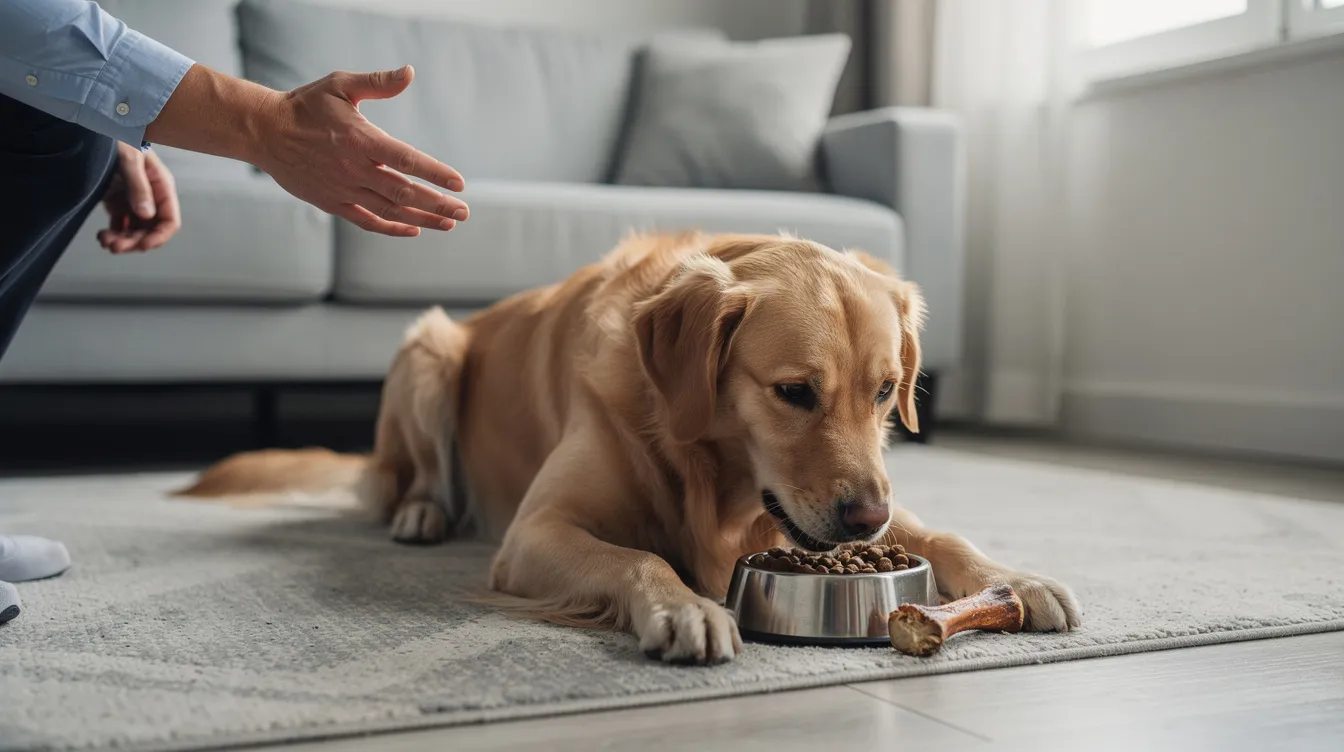
Resource guarding refers to behavior a dog uses to maintain or control access to something it perceives as valuable. This can include food items, toys, high-value chews, a resting place like a dog bed, a beloved possession, or even a person. For a broader look at resource guarding in dogs, including common signs, triggers, and training approaches, owners can learn more about resource guarding in dogs. The guarding behavior ranges from subtle shifts in body language, such as freezing, stiffening, or hovering, to overt aggressive behaviors like growling, snapping, lunging, or biting.
Resource guarding can have an adaptive function because maintaining access to valuable resources can matter to an animal. In domestic dogs, however, the intensity and circumstances of guarding vary greatly between individuals.
A dog resource guards not because it is “dominant” or “bad,” but because it is responding to a situation involving something it values. Understanding this foundation changes how we approach the problem, from confrontation to comprehension.
Normal vs. Problematic Guarding
Not all resource guarding involves overt aggression. Some dogs show lower-level behaviors such as eating faster when someone approaches, carrying a toy to another room, positioning their body over an item, freezing, or stiffening. These signals may be attempts to maintain control of a resource without escalating to snapping or biting, but they are still worth monitoring because they can indicate discomfort with an approach.
Guarding becomes more concerning when the dog’s response escalates to repeated growling, snapping, lunging at people or animals, or biting. Growling is an important warning signal and should not simply be punished. Continuing to pressure a dog after warning signals can increase the risk of escalation because the underlying discomfort has not been resolved.
Resource guarding can occur over food, toys, or space, and severity depends on factors such as frequency, predictability, the resource involved, the target of the guarding, and the dog’s individual response.
The Survival Instinct Foundation
Resource guarding has an adaptive foundation. Animals may attempt to maintain access to things they consider valuable, particularly when another individual approaches or threatens that access. Domestic dogs can therefore show guarding behavior even when food, toys, and resting spaces are readily available.
In modern homes, guarding can be influenced by the value of the resource, the dog’s temperament, previous experiences, surrounding animals, and the way people interact with the dog around valued items. This is why even well-fed dogs may guard a food bowl or favorite toy, while other dogs in similar environments show little or no guarding.
Primary Causes of Resource Guarding
Several factors may contribute to resource guarding, including temperament, learning history, early developmental experiences, environmental conditions, and interactions with people or other animals. These factors do not necessarily operate in isolation, and dogs that exhibit resource guarding may have more than one contributing influence.
Genetic and Breed Predisposition
Research suggests that individual characteristics may be associated with the likelihood of resource guarding, but these relationships should not be interpreted as direct causes. A University of Guelph survey involving a final sample of 3,589 dogs found that mixed-breed dogs and neutered males were more likely to be reported as showing resource guarding aggression in the presence of people. Because the research was observational, it could not determine whether those characteristics caused the behavior.
Temperament also appears relevant. Dogs with higher levels of impulsivity were more likely to show avoidance, rapid ingestion, and aggressive resource guarding, while greater fearfulness was associated with resource guarding aggression.
That said, any dog can develop guarding behavior regardless of breed, sex, or background. Genetics and temperament may influence behavior, but environment and individual experiences matter as well.
Fear-Based Learning
Fear, anxiety, and previous experiences may influence resource guarding in some dogs. For example, unpredictable or repeated removal of food or valued items may contribute to a dog’s concern about losing access to a resource. However, individual histories vary, and food insecurity, neglect, or shelter experience should not automatically be assumed to be the cause of guarding.
A 2020 functional-analysis study of one pet dog found that human-directed food guarding was maintained by multiple factors, including escape, attention, and continued access to the guarded item. Because the research involved a single dog, the findings are useful for demonstrating that guarding can serve different functions, but they should not be generalized to every dog.
Stress, frustration, and limited enrichment may also affect a dog’s overall arousal and behavior. However, lack of stimulation alone should not be treated as an established direct cause of resource guarding. Appropriate physical activity, enrichment, and predictable routines can support overall welfare but are not substitutes for addressing the specific guarding behavior.
Inadequate Early Socialization
The first three months of a puppy’s life are a particularly important period for social development. Safe, positive exposure to people, animals, environments, handling, and everyday experiences can help reduce the risk of later behavioral problems such as fear, avoidance, and aggression.
Early training can also introduce puppies to positive exchanges around toys and other valued items. Puppy training in Richmond, VA can help owners build appropriate handling, socialization, and foundational training routines during this important developmental period.
However, inadequate socialization should not be treated as a proven direct cause of resource guarding. Genetics, temperament, learning history, environment, and individual experiences can all influence how a dog responds around valuable resources.
Environmental and Behavioral Factors
Even dogs with stable temperaments and positive early experiences can develop resource guarding. Environmental conditions and repeated interactions around valued items can influence how comfortable or defensive a dog becomes when people or other animals approach.
Training Methods That Can Worsen Guarding
Dog owners may unintentionally increase conflict around resources through well-intentioned but counterproductive practices. Here’s how certain approaches can make the situation more difficult:
Taking items without trading: Repeatedly reaching for or forcefully removing a dog’s food, toy, or chew can make human approaches predict the loss of something valuable. When it is safe to do so, structured exchanges can help create a more positive association with giving up an item.
Punishment for growling: Punishing a low growl or other warning signal may suppress the warning without changing the dog’s underlying discomfort. This can make future responses harder to predict.
Alpha-based dominance techniques: Physical corrections, forced submission, and confrontational techniques can increase fear, stress, or defensive aggression in some dogs. Addressing the dog’s emotional response and teaching alternative behaviors is generally safer than confronting the dog over a valued resource.
Surprise approaches during meals: Frequently interfering with a dog while it is eating may be counterproductive. In the University of Guelph survey, removal of the food dish during meals was associated with more severe or frequent resource guarding. Because the study was observational, it could not establish whether bowl removal caused the guarding, but the association supports avoiding unnecessary confrontation around food.
Teaching a reliable “drop it” cue through reinforcement can be a useful part of resource-management training. In the University of Guelph survey, dogs reported to reliably drop items when asked were less likely to show resource guarding aggression and avoidance. Because the study found an association rather than direct causation, “drop it” is best viewed as one useful skill within a broader management and behavior plan.
General dog obedience training in Richmond, VA can also help owners develop clearer communication and reliable cues that support everyday management.
Resource Competition and Scarcity
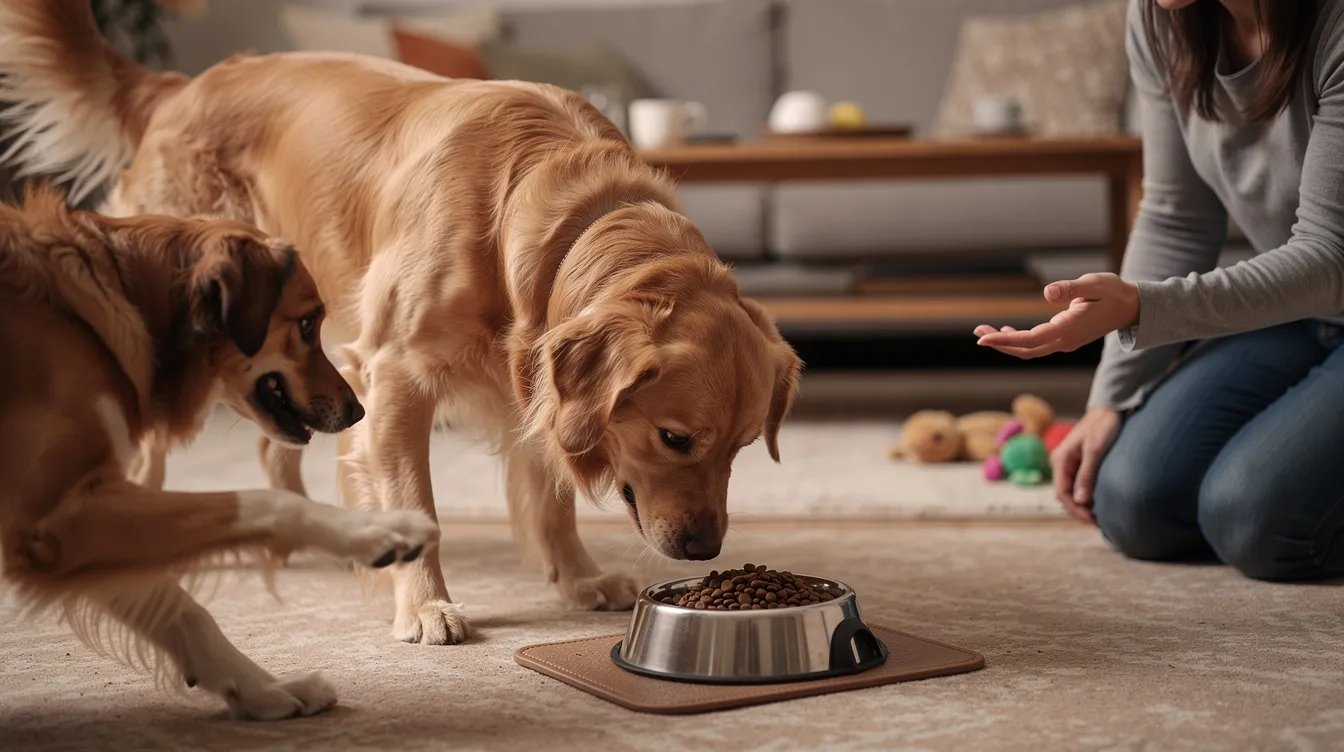
A dog’s social environment can influence opportunities for resource guarding and conflict. In the University of Guelph research, dogs living in multi-dog households were more likely to display resource guarding aggression, avoidance, and rapid ingestion around other dogs. This was an association and does not mean that simply living with another dog causes resource guarding.
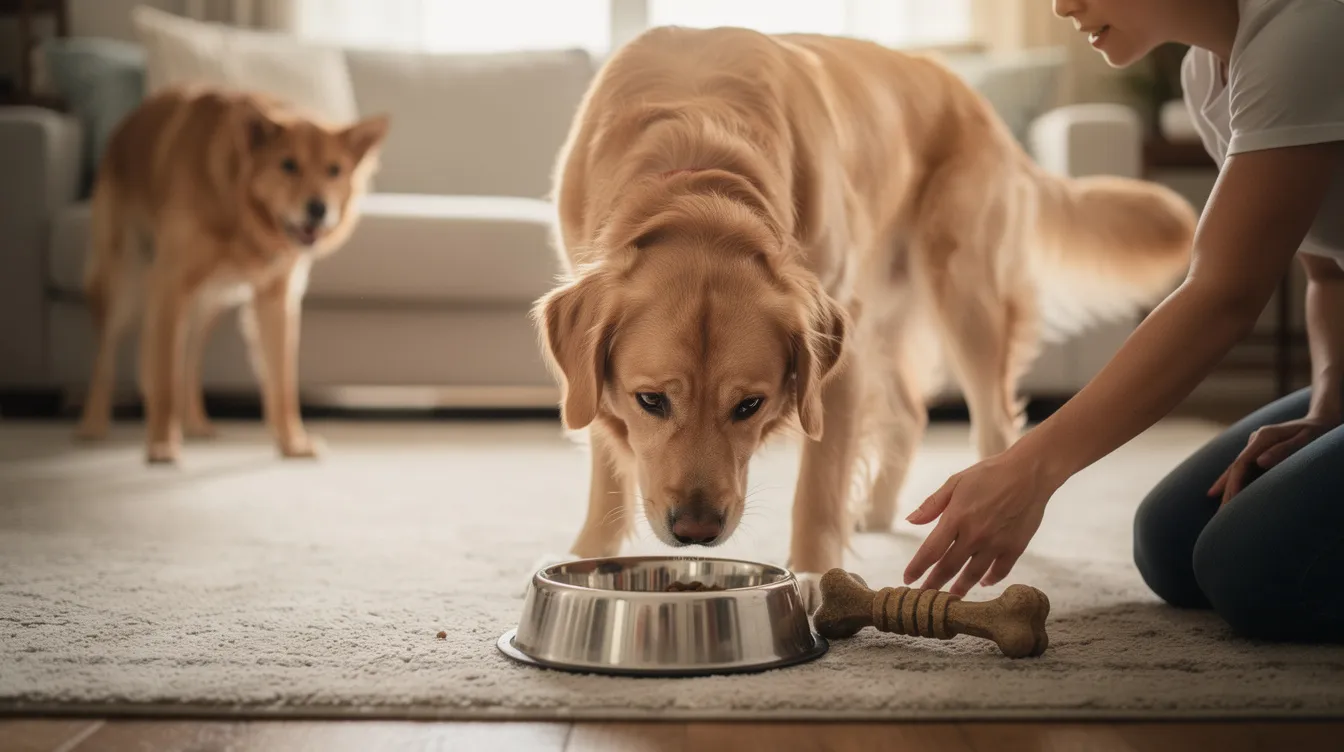
Competition can become especially important when multiple pets have access to the same high-value chews, food items, toys, or preferred resting spaces.
| Factor | More Potential for Conflict | Lower Potential for Conflict |
| Number of dogs | Multiple dogs accessing valued items together | Managed access and adequate space between dogs |
| Resource availability | Pets competing for the same valued items | Separate or equivalent resources when appropriate |
| Feeding arrangement | Dogs eating together when tension is present | Separate feeding areas using gates or separate rooms |
| Supervision | Unsupervised access to known guarding triggers | Supervised, structured access to high-value items |
For households with other dogs or other pets, the practical takeaway is clear: manage the environment to reduce resource guarding triggers and opportunities for conflict. Feed dogs separately when necessary. Use gates or separate rooms during mealtimes when there is tension around food. Let dogs enjoy high-value chews in safe, undisturbed areas, and restrict access to known triggers when appropriate supervision isn’t possible.
These management strategies do not necessarily resolve the underlying cause, but they can reduce opportunities for conflict while a behavior plan is being developed.
Common Contributing Factors and Solutions
Several additional factors can influence resource guarding, and understanding them helps pet parents build a more complete picture of why their dog guards.
Rescue and Shelter Background
A shelter assessment does not always predict how a dog will behave after adoption. In a 2012 ASPCA-affiliated study, 96 dogs that displayed food-bowl guarding during shelter assessments were adopted with a behavior-modification program and follow-up support. Six adopters reported at least one guarding incident during the first three weeks, only one of which involved the food bowl. By three months, adopters reported no food-bowl guarding.
These findings suggest that food guarding observed in a shelter may not necessarily persist in the home. However, the researchers could not determine exactly why so little guarding was reported, so shelter history, abandonment, or food insecurity should not automatically be assumed to explain an individual dog’s behavior.
What matters after adoption is providing a predictable environment, appropriate management, sufficient resources, and a training approach suited to the individual dog.
Medical Issues and Pain
Pain and medical conditions can change a dog’s tolerance for handling or approaches and may contribute to new or worsening defensive behavior. Gastrointestinal discomfort, dental pain, arthritis, and other sources of discomfort may make a dog more reactive when approached, particularly while eating or resting.
A dog experiencing pain may become protective of a resting place or react when someone approaches because movement or physical contact is uncomfortable. Sudden behavioral changes therefore warrant medical attention rather than assuming the problem is purely behavioral.
A thorough physical exam by a veterinarian is especially important when guarding behavior appears suddenly or escalates in a previously calm dog. A veterinarian or veterinary behavior specialist can help determine whether pain, illness, medication, or another medical factor may be contributing.
A published case report involving two female mixed-breed dogs with aggression and resource guarding documented improvement following a combined treatment plan involving environmental and behavioral modification, avoidance of triggering situations, and serotonergic medication. A case report does not mean medication is appropriate for every dog, but it demonstrates why veterinary involvement may be important in selected cases.
Inconsistent Human Behavior
Inconsistent interactions around resources can make it difficult for a dog to predict what will happen when someone approaches. For example, allowing a dog to keep a toy at one time but forcefully removing or punishing the dog over the same type of item at another time may contribute to uncertainty or conflict around valued resources.
Dog owners may also overlook early warning signs in canine body language. Freezing, stiffening, hovering over an item, turning away with a resource, or showing other signs of tension can indicate discomfort. Continuing to approach after these signals can increase pressure on the dog.
Conversely, punishing warning signals may suppress communication without resolving the underlying concern.
The goal is to maintain consistent, predictable rules around resources across family members. When appropriate and safe, structured exchanges and gradual behavior modification can help change how a dog responds when people approach valued items. For dogs with an established history of snapping or biting, these exercises should be developed with professional guidance rather than tested through confrontation.
Conclusion and Next Steps
Resource guarding can have multiple interconnected influences, including temperament, learning history, early experiences, environmental competition, interactions around valued items, medical issues, and inconsistent human behavior. No single factor fully explains why every dog resource guards, and effective intervention requires understanding the circumstances surrounding the individual dog’s behavior.
Professional guidance is strongly recommended for severe cases of resource guarding. If your dog is lunging, snapping, or biting over resources, avoid deliberately testing the behavior and seek help from a qualified professional experienced with aggression and resource guarding.
Here are your immediate next steps:
Document specific triggers: Note what your dog guards, such as food, toys, spaces, or people, who or what the dog guards the resource from, and what body language appears before escalation.
Schedule a physical exam: If the behavior is new, worsening, or accompanied by other behavioral or physical changes, talk with your veterinarian to rule out pain or other medical contributors.
Implement management strategies now: Use separate feeding areas, gates, appropriate supervision, and controlled access to known high-value triggers to reduce opportunities for conflict while you seek professional guidance.
Consult a qualified professional: A trainer or behavior professional experienced with resource guarding can assess the dog’s triggers and history and help develop an appropriate management and training plan. Cases involving serious aggression, bites, significant anxiety, or suspected medical contributors may also require veterinary or veterinary behavior specialist involvement.
For dogs showing aggression or reactivity around resources, aggressive dog training in Richmond, VA may provide an appropriate starting point for discussing the dog’s behavior and determining which available training option best fits the situation.
Related topics worth exploring include early socialization strategies for puppies, reinforcement-based methods for teaching reliable “drop it” and “leave it” cues, and structured behavior modification for dogs with established guarding patterns.
Frequently Asked Questions
What is resource guarding in dogs?
Resource guarding involves a dog attempting to maintain access to something it values, such as food, toys, chews, resting spaces, or other resources. The behavior can range from subtle avoidance or stiffening to growling, snapping, lunging, or biting.
How can I stop resource guarding?
Start by managing the environment to reduce opportunities for conflict and avoid forcefully removing guarded items or deliberately testing the dog’s response. Skills such as “drop it” can be useful when taught appropriately, but dogs that snap, lunge, or bite over resources should be evaluated by a qualified professional experienced with resource guarding.
Can medical issues cause resource guarding?
Pain or physical discomfort can contribute to sudden or worsening defensive behavior, including responses that resemble or intensify resource guarding. A veterinary examination is particularly important when guarding develops suddenly in a dog that did not previously show the behavior.
Does resource guarding occur between dogs or other animals?
Yes. Resource guarding can occur between dogs and may also involve other animals in the household. Separating pets during meals and managing access to high-value resources can help reduce opportunities for conflict.
Why shouldn’t I punish my dog for growling?
Growling is an important warning signal that communicates discomfort or a desire for more distance. Punishing the growl may suppress that warning without changing the dog’s underlying response, so the safer approach is to respect the signal, manage the situation, and address the cause of the guarding through an appropriate behavior plan.
